The limits of the thing you are buying
What a survey can and cannot find
We can tell you what we found and what we could not reach. What nobody can honestly do is certify that a building is safe — and the section of the report listing what was inaccessible is the part that makes the rest of it worth anything.
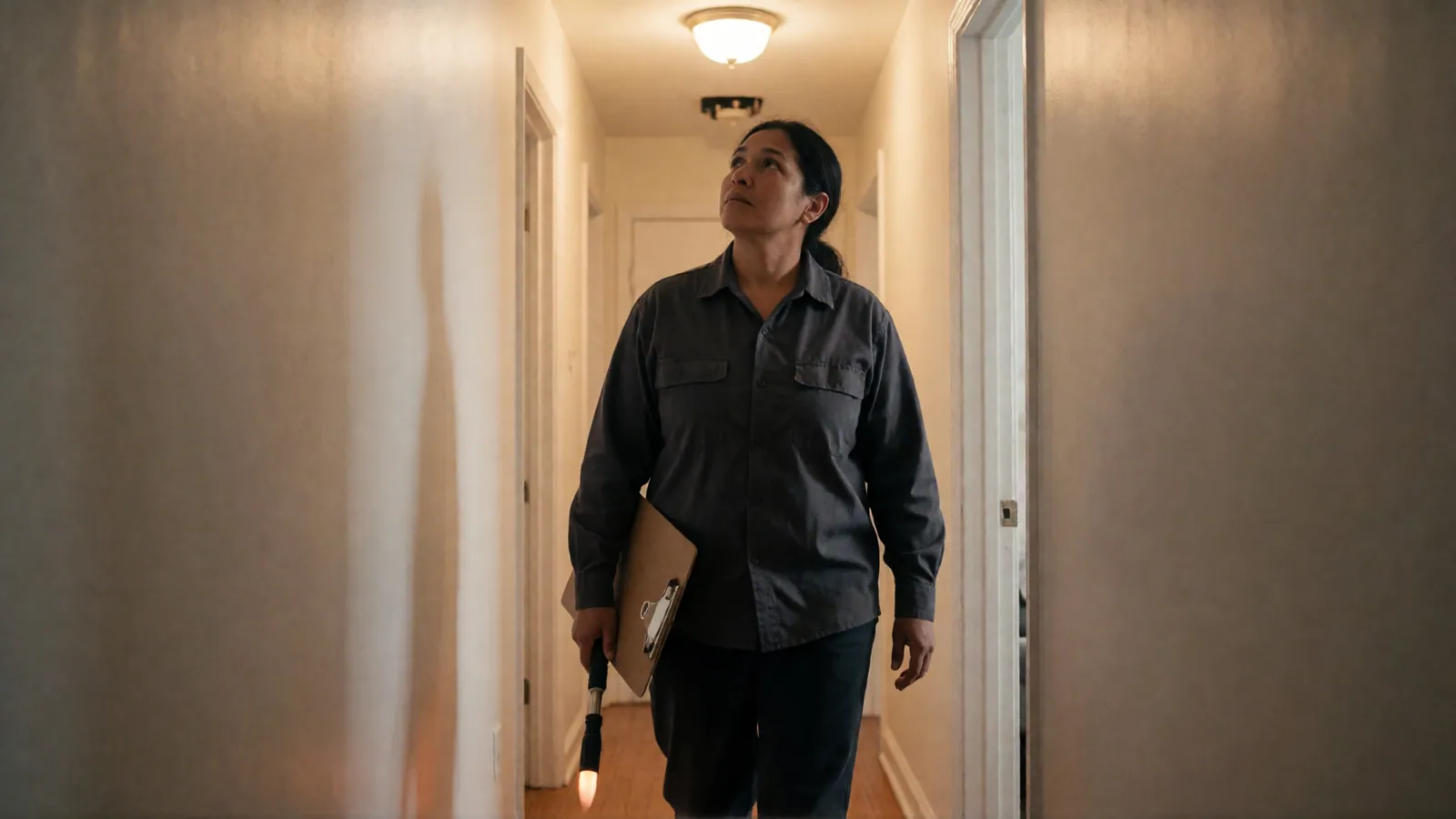
A report on what was reachable on the day. An electrical inspection is a report on what was accessible on the day. We cannot see inside a finished wall, under a floor we did not lift, or behind equipment we were not able to isolate, and no instrument we own sees through plaster. So we can tell you what we found and what we could not reach, and we will write down both. What we cannot do — what nobody can honestly do — is certify that a building is safe. Anyone offering you that is selling you a feeling.
Why “certified safe” is not a thing anybody can sell you
An electrical installation is largely concealed. It runs through wall cavities, under floors, above ceilings and behind fitted furniture, and almost none of it is visible in a finished building. What an inspector examines is the accessible fraction: the service and panel, the devices, whatever wiring can be seen in a basement or an attic, and the electrical behaviour of circuits as measured from the outlets.
That fraction is genuinely informative. It is not the whole installation, and no technology in the hands of a domestic electrical contractor changes that. A thermal camera reads surface temperature; it does not see through plaster, whatever a marketing photograph implies. So the honest product is a report on a sample, with the boundaries of that sample written down.
What we test, rather than merely look at
Looking tells you about condition. Testing tells you whether something works. The difference matters most on exactly the things that are invisible: a three-pin outlet looks identical whether or not there is a grounding conductor behind it, and a ground-fault device looks identical whether or not it will open.
So we test polarity and the continuity of the equipment grounding conductor at a sample of outlets through the building, operate ground-fault devices to confirm they trip, examine the grounding electrode system and every bond, and check the panel terminations for evidence of heat. Where the building is occupied and loaded we may also scan the service equipment thermally, which finds warm connections that look completely normal.
What ends up in the limitations section
Everything inside a finished wall, ceiling or floor we did not open. Circuits behind a fitted kitchen or built-in furniture. Crawl spaces too small to enter safely, and attic areas where insulation covers the wiring — which is frustrating, because that is exactly where a knob-and-tube problem hides. Anything behind equipment that could not be isolated. Buried cable outdoors. Areas we were asked not to enter.
These are named individually, room by room, not summarised as “some areas were inaccessible”. If you want one of them opened up, that is a conversation we can have, and sometimes the right answer is to open two small test points rather than wonder.
How the findings are ranked
Three tiers, because collapsing them is how fear gets sold. Dangerous now is a hazard that should be dealt with immediately, and we will tell you before we leave rather than waiting for the report. Should be planned is a real defect on a sensible timescale — months, not hours. Not how it would be done today is an installation that was compliant when built and has been overtaken by practice; it is information, not an instruction, and quite a lot of it never needs acting on at all.
A report that presents all three as one urgent package is not a report. It is a quotation wearing a report's clothes.
What you get for $385
The report itself
A written document
Not a verbal summary followed by a quote. Something you can read twice, show to somebody else, and keep.
Photographs of the findings
So a finding is a thing you can look at rather than a sentence you have to take on trust.
What was tested, and how
Which circuits, which tests, which results. Written to be legible to another electrician.
What could not be reached
Named specifically, area by area. The section that makes the rest of the report mean something.
Findings in three tiers
Dangerous now, should be planned, and not how it would be done today. Those are different things.
An itemised price to fix it
Item by item, so you can do some of it, all of it, or take the list to somebody else entirely.
Questions people actually ask
Surveys — frequently asked
Can anybody certify that my house is electrically safe?
No. An inspection is a report on what was accessible on the day it was done. Nobody can see inside a finished wall, and no instrument reads through plaster. A contractor offering to certify a building as safe is offering you a feeling — and the moment you would need that certificate to mean something is precisely the moment it will not.
What can you not see?
Anything inside a finished wall, ceiling or floor we did not open. Circuits behind fitted kitchens and built-in furniture. Crawl spaces too small to enter and attic areas packed with insulation. Anything behind equipment we could not safely isolate. Buried cable outdoors. All of that gets named specifically in the report rather than left as an implication.
Why does the report list what you could not reach?
Because that section is what makes the rest of it trustworthy. A report with no limitations is either describing a building with no walls or is not telling you something. If you are ever shown an electrical report with no limitations section at all, that absence is itself the finding.
Is this the same as a home inspection?
No. A general home inspector covers the whole building visually and does not test the electrical installation — most say so in their own terms of engagement. This is a licensed electrician testing what can be tested: polarity, grounding continuity, ground-fault device operation, and the condition of the service and panel.
Will you find everything?
No, and we would be suspicious of anybody who said otherwise. We will find what is accessible and testable, and we will tell you where the gaps are so you can decide whether to open anything up. On a house being bought, the gaps are often the most useful part of the conversation.
What if I want a second opinion on your report?
Get one, and we mean that. The report is written to be legible to another electrician: what was found, what was tested, what was not reachable. If a second opinion disagrees with us we would genuinely like to know, and if they are right we will say so.
Buying, selling, or just uneasy
Book a survey for $385
A written report on a one- or two-family house: what we found, what we tested, what we could not reach, and what to do first. Yours to keep, and frequently used as a negotiating document, which is exactly what it is for.