EV, backup & commercial
Appliance and HVAC circuits in Woodside, NY
Every large appliance arrives with a nameplate saying exactly what circuit it needs. A surprising amount of the trade fits what is already there instead, and hopes.
Ranges, wall ovens, cooktops, dryers, dishwashers, waste disposers, water heaters, mini-split heads and outdoor condensers, window and through-wall air conditioners: each is a fixed or semi-permanent load that wants its own supply, correctly sized, frequently with a means of disconnection nearby so it can be isolated for service without turning the house off.
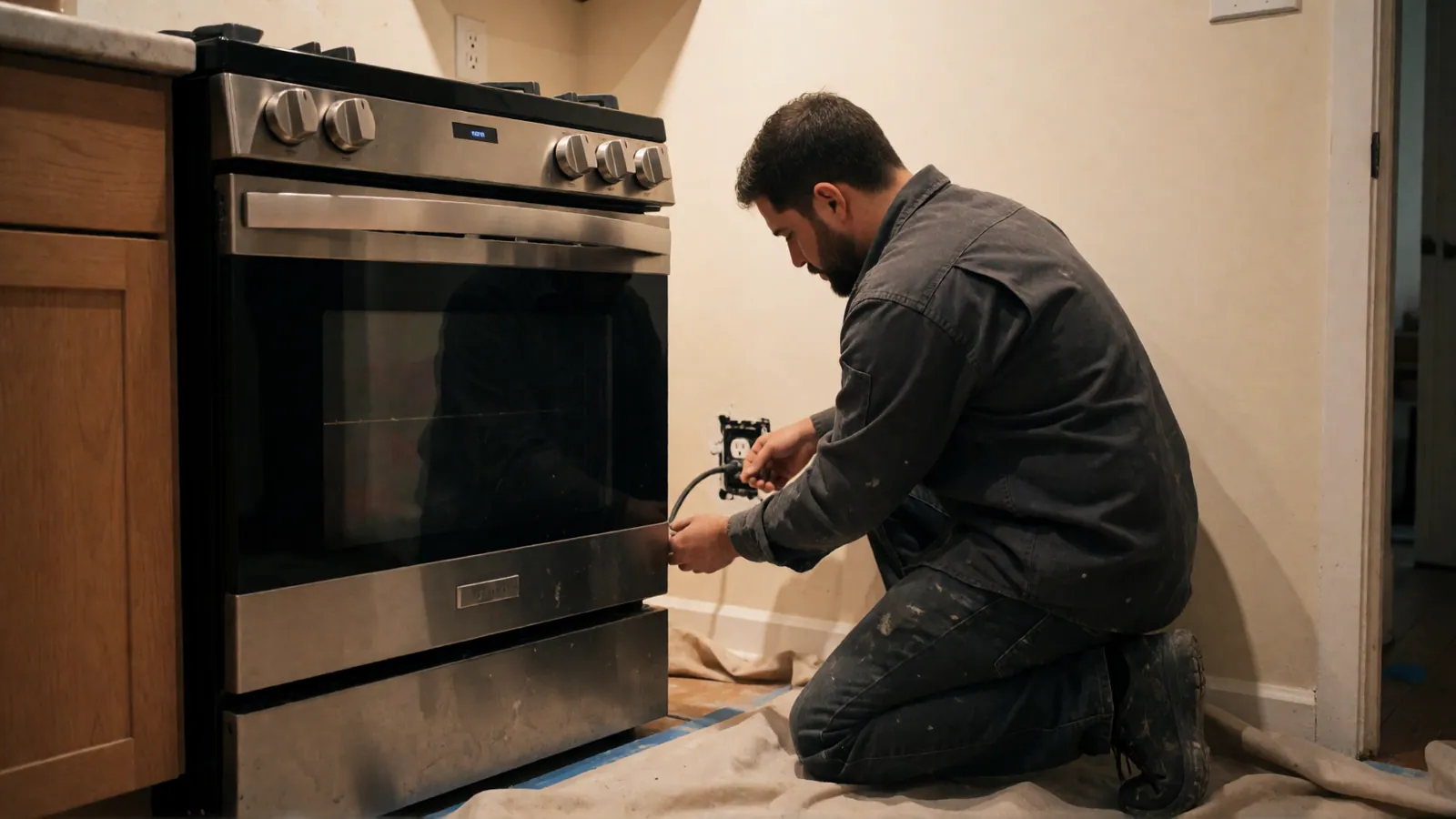
The failures we get called to are nearly all the same story. A new appliance was fitted to the circuit the old one used, without anybody reading what the new one actually draws — and modern appliances are not the same as the ones they replaced. Induction cooking in particular is a much bigger electrical proposition than the gas range it displaced.
The summer job in Woodside: air conditioning
Window and through-wall units are the single most common cause of nuisance tripping here between June and September, and it is almost always the same mechanism: a compressor drawing a large inrush on start-up, on a circuit already carrying a bedroom's worth of everything else.
The right answer for a large unit is a dedicated circuit. The right answer for several units is usually to plan them together rather than adding one circuit a summer for three years, because the routes overlap and doing them at once is materially cheaper.
Mini-split systems are a different job again — an outdoor condenser on its own circuit with a disconnect within sight of the unit, and the interconnecting work coordinated with whoever is doing the refrigeration side. We are used to working alongside an HVAC contractor and will tell you clearly where our scope stops.
Ranges, dryers and the four-wire question
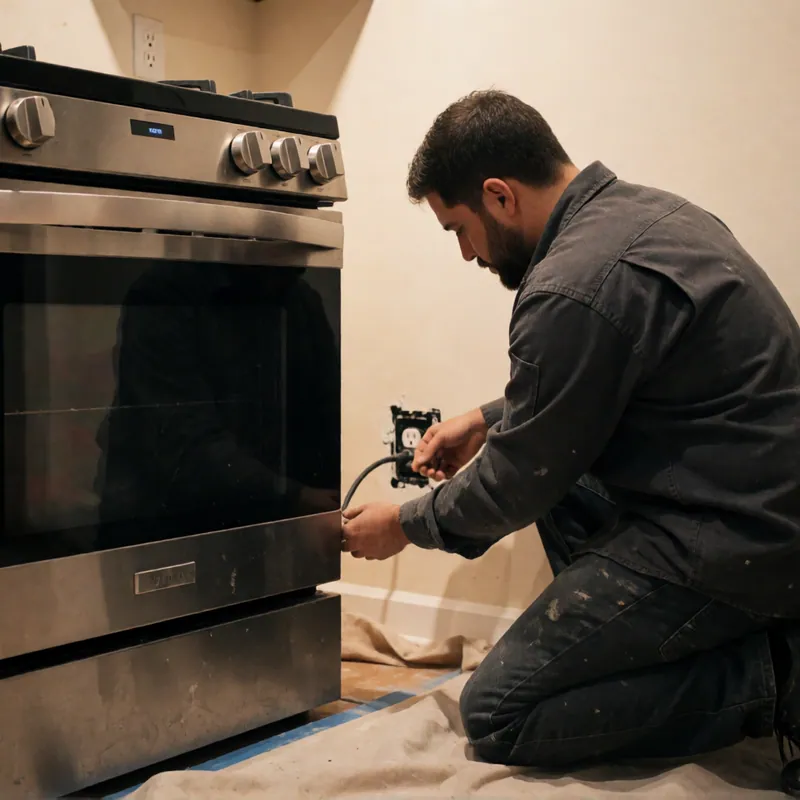
Older range and dryer outlets in Queens houses are frequently the three-wire type, which has not been permitted for new work for a long time. Existing ones are generally allowed to remain, but the moment the circuit is altered or the outlet is replaced, the four-wire arrangement — with a separate grounding conductor — is what is required.
This matters because the three-wire arrangement uses the grounded conductor as the fault path for the appliance frame, which is exactly the thing modern practice moved away from. If we are in your kitchen doing something else, we will tell you what it would cost to put right.
Included as standard
What the job actually includes
Sized to the actual nameplate
Of the appliance you are actually fitting, not the one it replaced.
A disconnecting means where required
Within sight of the equipment, so it can be serviced without shutting the house down.
Four-wire where four-wire is required
For ranges and dryers on new or altered circuits.
Coordination with the other trades
Kitchen fitters, plumbers, HVAC. And a clear statement of where our scope ends.
Several planned together
Because the routes overlap and doing them in one visit is far cheaper than one a year.
Filed and inspected
New circuits are new work.
When to call us
Signs this is the job you need
- A breaker that trips when the air conditioner starts
- A new range, oven, dryer, dishwasher or water heater going in
- Moving from gas to induction, which is a much larger electrical load
- A mini-split system being installed
- A three-wire range or dryer outlet being replaced
- An appliance whose plug does not match the outlet, and a tempting adaptor
Appliance and HVAC circuits — what it costs
- Per circuit, including the receptacle or the disconnect.$520 – $1,800
This is the range this job actually lands in, not a headline figure. The low end is a straightforward version of the work; the high end is one with a hard access problem, an old service, or something that has to be opened up before anybody can be certain. We tell you which one you have after we have looked, and the written quote says where the price could still move and why.
Questions we are actually asked
Appliance circuits — frequently asked
My new range does not fit the old outlet. Can I use an adaptor?
No. The outlet type encodes the circuit rating and the grounding arrangement, and an adaptor defeats both. If the plug does not match, the circuit behind it is the thing that needs attention, and it is usually a straightforward job.
Does every appliance need its own circuit?
No — small ones share happily. Fixed and large appliances generally need their own, and the appliance's own nameplate and installation instructions say so explicitly. That document is the answer, and we read it rather than guessing.
Can you do this at the same time as my kitchen fit-out?
Yes, and it is much the best moment — the walls are open, the units are not in yet, and the routes are free. We work to the kitchen designer's plan and will flag anything on it that is not going to work electrically before it becomes expensive.
Related work
Often needed alongside this
New circuits
A circuit for the window unit, the home office, the dryer or the workshop — run properly, rather than spurred off something.
$420 – $1,300
Load calculations
The arithmetic that decides whether you need a service upgrade at all — done before anybody quotes you one.
$340
Breakers & protection
Nuisance trips, dead circuits, and bringing arc-fault and ground-fault protection up to where the code now expects it.
$185 – $520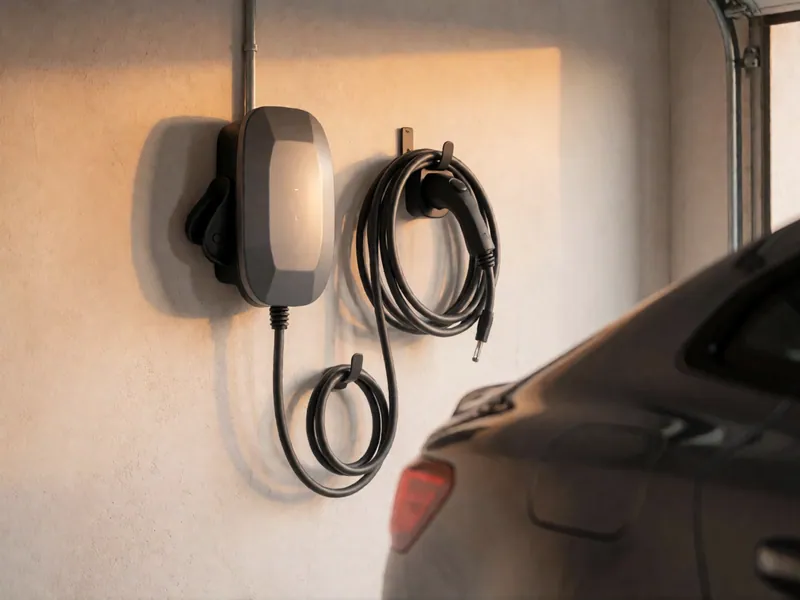
EV chargers
A Level 2 charger on a dedicated circuit, filed and inspected, with the load calculation done first.
$1,150 – $3,200Somebody who does the work will come and look
Book a visit
Telephone the shop and you will get an electrician rather than a call centre. For defined work — a panel, a charger, a lighting scheme — the quote is free. For a fault, the visit is the diagnosis and it is $165 for the first hour, credited against the work if you go ahead the same visit. Either way we will tell you on the telephone which one it is.