Panels & power
Subpanels and feeders in Woodside, NY
When the work is at the other end of the house from the panel, running eight circuits back to it is the expensive way. One feeder and a small distribution point is usually the right one.
A subpanel is a second distribution point fed from the main panel by a single set of conductors. It is the standard answer to a finished basement, an attic conversion, a garage, a workshop, a rear extension, or a rental unit that wants its own set of circuits — anywhere that adding six or eight home runs back to the main panel would mean six or eight long, awkward, expensive cable routes.
It is also one of the most commonly miswired things we find in Queens houses, because the rules for a subpanel are subtly different from those for a main panel, and the difference is invisible once the cover is on.
The mistake we find in most existing subpanels
In a main panel, the grounded conductor and the grounding conductors are bonded together — that is where the connection belongs. In a subpanel they must be kept separate: the neutrals on an isolated bar, the grounds on a bonded one, and the bonding screw removed.
Get it wrong and normal current flows on the grounding conductors and on any metal path connected to them — conduit, water pipe, appliance casings. Everything works. Nothing trips. It is invisible until the day a grounding path carries current somebody is touching. We find this several times a year, usually in a basement finished by a previous owner, and correcting it is neither difficult nor expensive.
The related one is a three-wire feeder where a four-wire feeder is required — an old detached-garage arrangement that has not been permitted for a long time. Both get put right as part of any work we do on the panel.
Sizing it so you do not do this twice
The feeder is the expensive part, because it is the part that goes through the building. The cabinet at the end of it is comparatively cheap. That asymmetry means the sensible move is to size the feeder for what the space will plausibly want in ten years, not for the four circuits you are putting in this month.
That is not an upsell — it is the one place in this trade where buying capacity early is genuinely cheaper than buying it later, because the second time you pay for the route again. We will tell you what the difference costs and let you decide.
Included as standard
What the job actually includes
Feeder sized to the load and the run
Including the voltage drop over a long route, which is what gets skipped on a detached garage.
Neutrals and grounds correctly separated
Isolated neutral bar, bonded ground bar, bonding screw removed. The thing everybody gets wrong.
Four-wire feeder
Never the old three-wire arrangement, including out to a detached structure.
Overcurrent protection at both ends where required
Sized to the feeder, not to the cabinet.
Directory made out at both panels
So the main panel says where the feeder goes, and the subpanel says what it feeds.
Filed and inspected
Like everything else that requires it.
When to call us
Signs this is the job you need
- A basement, attic or garage being finished or brought into use
- A rental unit that needs its own circuits and its own isolation
- A workshop or a home office that keeps tripping the circuit it shares
- An existing subpanel with neutrals and grounds landed on the same bar
- A detached garage on an old three-wire feeder
- Long home runs being proposed back to a main panel at the far end of the house
Subpanels and feeders — what it costs
- Depends almost entirely on the feeder run and what it has to pass through.$1,600 – $4,200
This is the range this job actually lands in, not a headline figure. The low end is a straightforward version of the work; the high end is one with a hard access problem, an old service, or something that has to be opened up before anybody can be certain. We tell you which one you have after we have looked, and the written quote says where the price could still move and why.
Questions we are actually asked
Subpanels & feeders — frequently asked
Is a subpanel cheaper than running more circuits?
Usually, once you are past three or four circuits at any distance — because you pay for one route instead of several. Below that it is often not. We will price both if it is close.
Can I put a subpanel in a closet?
There are clearance requirements around electrical equipment, and clothes closets specifically are not permitted locations. There is almost always a workable spot nearby, and we will find it before quoting rather than after.
My basement already has a subpanel. Is it safe?
Have a look at whether the neutrals and grounds are on separate bars — that is the single most common defect. If you would rather not open anything, that is exactly the right instinct, and it is a fifteen-minute check on a diagnostic visit.
Related work
Often needed alongside this
Panel upgrades
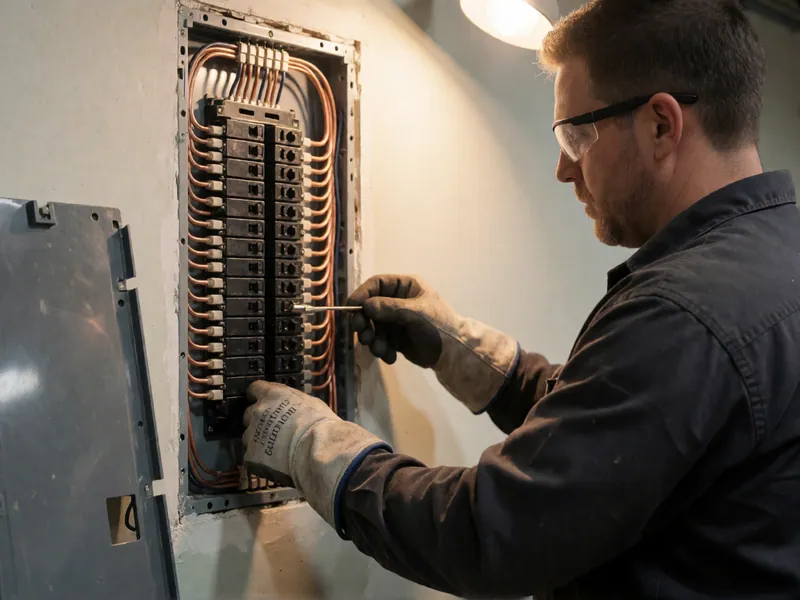
Replacing a tired or undersized load centre with a modern one — filed, inspected, and done in a day and a half.
$3,400 – $6,800
Load calculations
The arithmetic that decides whether you need a service upgrade at all — done before anybody quotes you one.
$340
New circuits
A circuit for the window unit, the home office, the dryer or the workshop — run properly, rather than spurred off something.
$420 – $1,300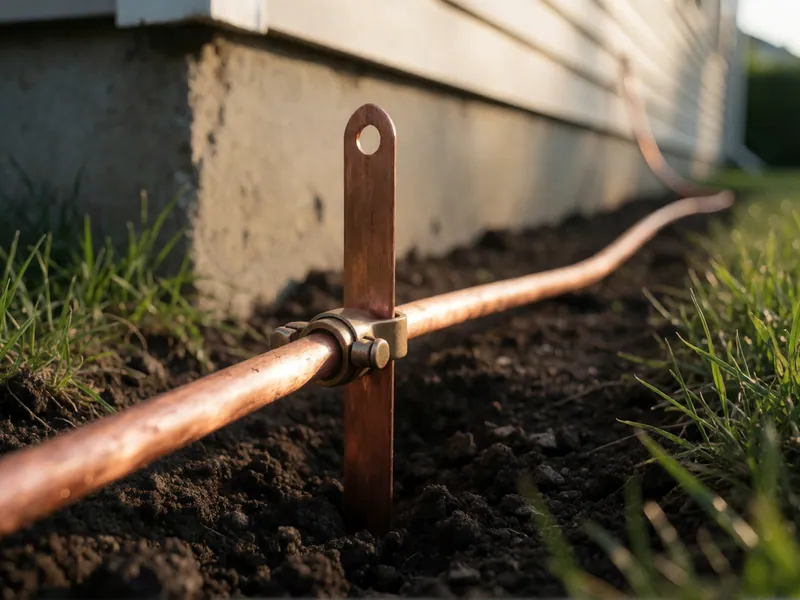
Grounding & bonding
The part of your system that does nothing at all until the day it is the only thing between you and a fault.
$285 – $2,200Somebody who does the work will come and look
Book a visit
Telephone the shop and you will get an electrician rather than a call centre. For defined work — a panel, a charger, a lighting scheme — the quote is free. For a fault, the visit is the diagnosis and it is $165 for the first hour, credited against the work if you go ahead the same visit. Either way we will tell you on the telephone which one it is.