Grounding, safety & testing
Thermal imaging surveys in Woodside, NY
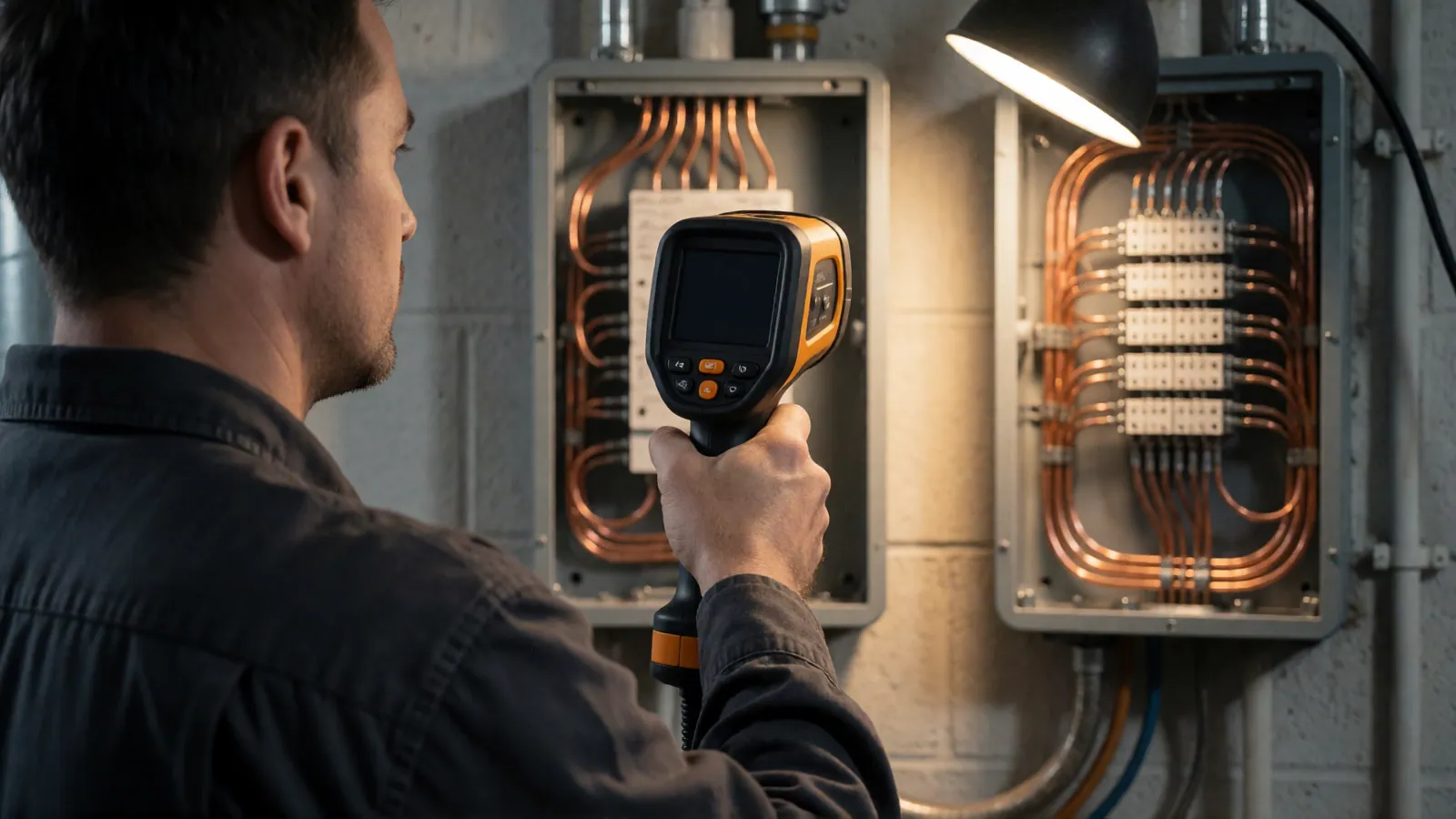
Almost every electrical fire starts as a connection that has been running slightly too warm for months. A thermal camera sees that while it is still a maintenance item instead of an emergency.
Resistance makes heat. A termination that has loosened — through vibration, through thermal cycling, through aluminium creeping under a screw, or because somebody never torqued it properly in the first place — develops resistance, and that shows up as a warm spot long before it shows up as a failure. A thermal camera makes that warm spot visible from a safe distance without taking anything apart.
This is standard practice in commercial and industrial maintenance and almost unheard of on houses, which is a shame, because the same physics applies to a two-family in Woodside as to a distribution board in an office building.
It only works under load
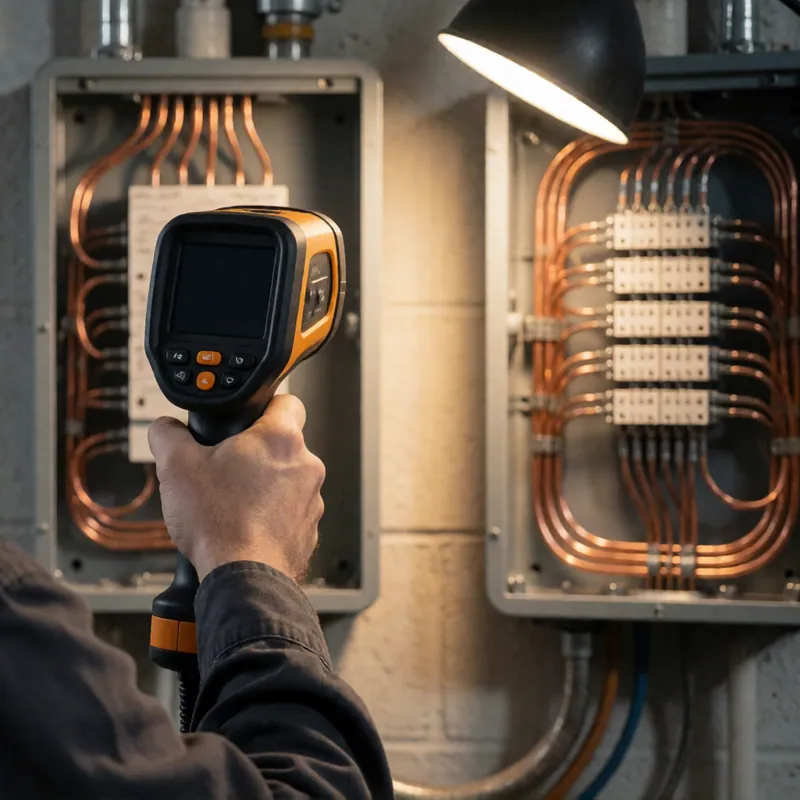
This is the part that gets skipped, and it matters more than the camera. A connection carrying no current is at room temperature no matter how bad it is. A survey done on an empty building on a cool morning will find nothing and tell you nothing.
So we survey with the building working — heating or cooling running, the kitchen busy, the laundry on if there is one, and ideally at a time of day when the place is genuinely loaded. In a commercial space that usually means before opening or after closing but with the plant running. Where we cannot get realistic load, we say so in the report rather than presenting a cold scan as a clean bill of health.
What we find, and what it means
Loose or corroded terminations at breakers, lugs and busbars — the classic finding, and cheap to fix when it is caught. Overloaded circuits and unbalanced phases in a commercial board, which show up as one leg running consistently warmer. Failing breakers. Poor connections at a meter pan or a main disconnect, which is a more serious finding because of where it sits. And occasionally something in a wall — a warm patch with no fitting behind it — that is worth opening up.
A finding is graded by how much hotter it is than its neighbours doing the same job, because absolute temperature on its own is close to meaningless. That comparison is what the report is built on.
Included as standard
What the job actually includes
Survey under realistic load
Or a report that says plainly it could not be, rather than a cold scan sold as a clean result.
Service equipment, panels and subpanels
Plus accessible junction boxes and any equipment you are worried about.
A report with the images in it
Each finding shown, with the comparison it is graded against.
Findings ranked by severity
By temperature rise over comparable connections, not by absolute reading.
Immediate action where warranted
Anything genuinely hot gets dealt with on the day, not scheduled.
A price for the corrections
Usually small. A loose lug is a torque wrench and ten minutes.
When to call us
Signs this is the job you need
- A warm panel cover, or a panel that hums or smells
- A commercial space with a distribution board nobody has ever looked inside
- A house with aluminium branch circuits — the terminations are the whole risk
- Intermittent faults that nobody has been able to pin down
- Before buying a building, or before a lease renewal on a commercial space
- As periodic maintenance on any three-phase board
Thermal imaging surveys — what it costs
- Residential service equipment through to a small commercial distribution board.$450 – $1,100
This is the range this job actually lands in, not a headline figure. The low end is a straightforward version of the work; the high end is one with a hard access problem, an old service, or something that has to be opened up before anybody can be certain. We tell you which one you have after we have looked, and the written quote says where the price could still move and why.
Questions we are actually asked
Thermal imaging — frequently asked
Can a thermal camera see through walls?
No — and anybody who implies otherwise is overselling it. It reads surface temperature. It can sometimes show a warm patch on a wall surface caused by something behind it, which is a useful clue, but it is not an X-ray and we will not describe it as one.
Do I need this on a house?
It is a genuine luxury for most houses and we will say so. Where it earns its keep on a house is aluminium branch wiring, a panel with a history, or persistent unexplained faults. On a commercial space it is much easier to justify.
How disruptive is it?
Covers come off the panels, which means the equipment is exposed while we scan, so the area is kept clear. Otherwise nothing is dismantled and the building keeps working — that is the entire point of the technique.
Related work
Often needed alongside this
Safety inspections
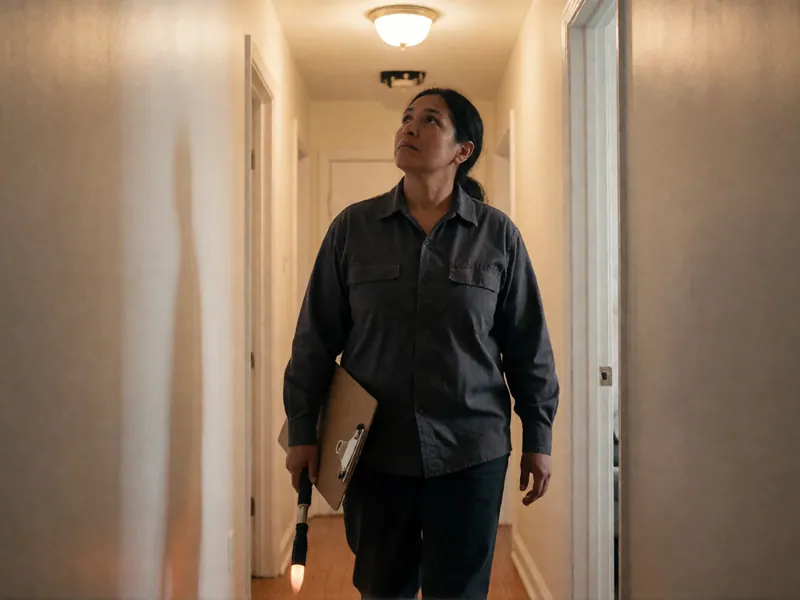
A written report on what we found, what we could not reach, and what actually needs doing first.
$385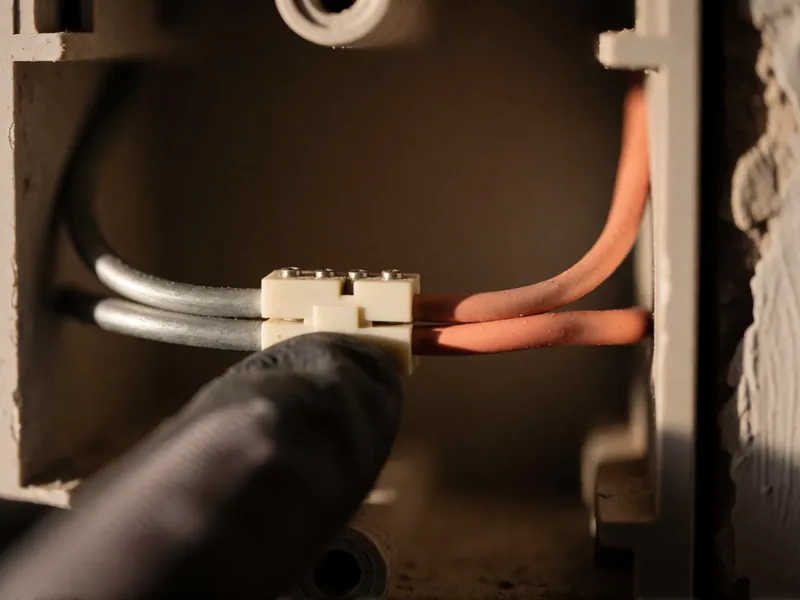
Aluminium wiring
The permanent repair the Consumer Product Safety Commission actually recommends — which is usually not a rewire.
$1,900 – $5,400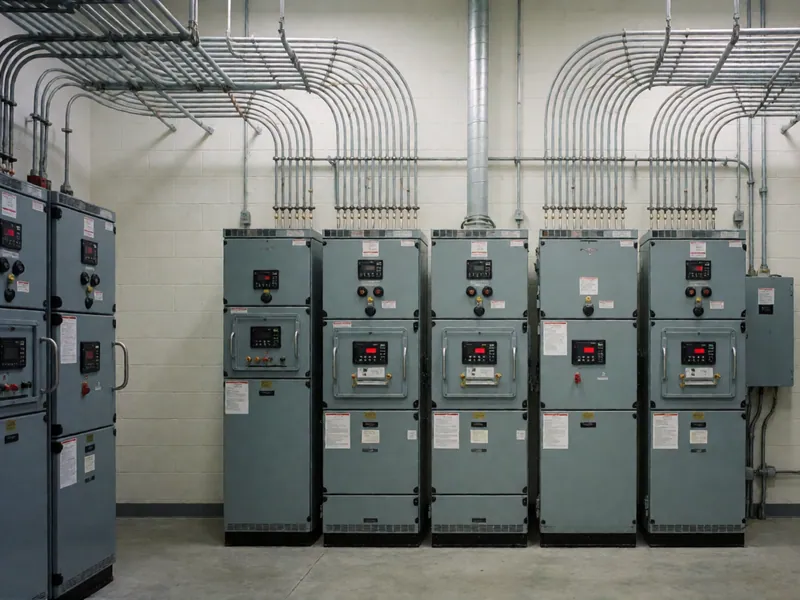
Commercial
Shops, restaurants, clinics and small offices along Roosevelt and Queens Boulevard — fit-outs and service work.
Quoted after a walk-through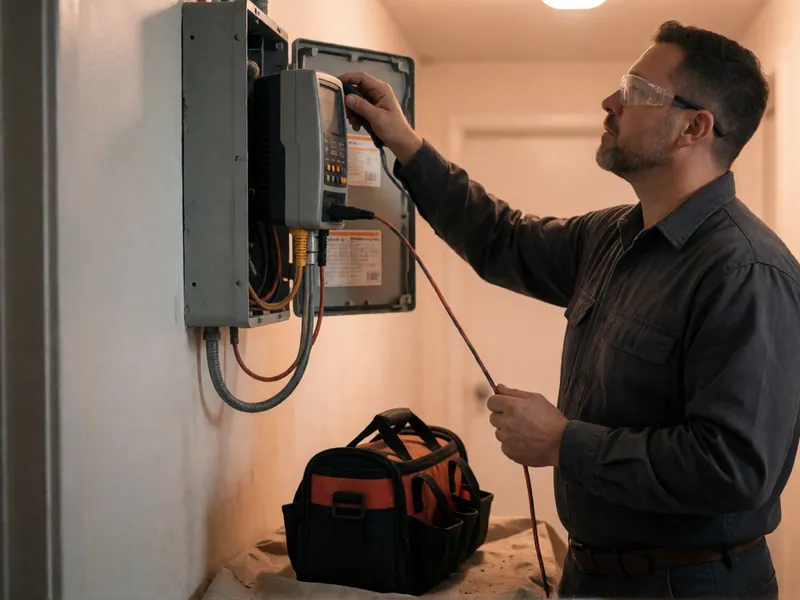
Troubleshooting
Half the house dark, a breaker that will not stay in, a smell you cannot place. Diagnosis first, quote second.
$165Somebody who does the work will come and look
Book a visit
Telephone the shop and you will get an electrician rather than a call centre. For defined work — a panel, a charger, a lighting scheme — the quote is free. For a fault, the visit is the diagnosis and it is $165 for the first hour, credited against the work if you go ahead the same visit. Either way we will tell you on the telephone which one it is.