Wiring & rewiring
Knob-and-tube replacement in Woodside, NY
Wiring installed before the Second World War is still live in a surprising number of Queens houses. The hazard is real, but it is not the one most people are told about — and understanding the difference decides whether you need a full rewire or a much smaller job.
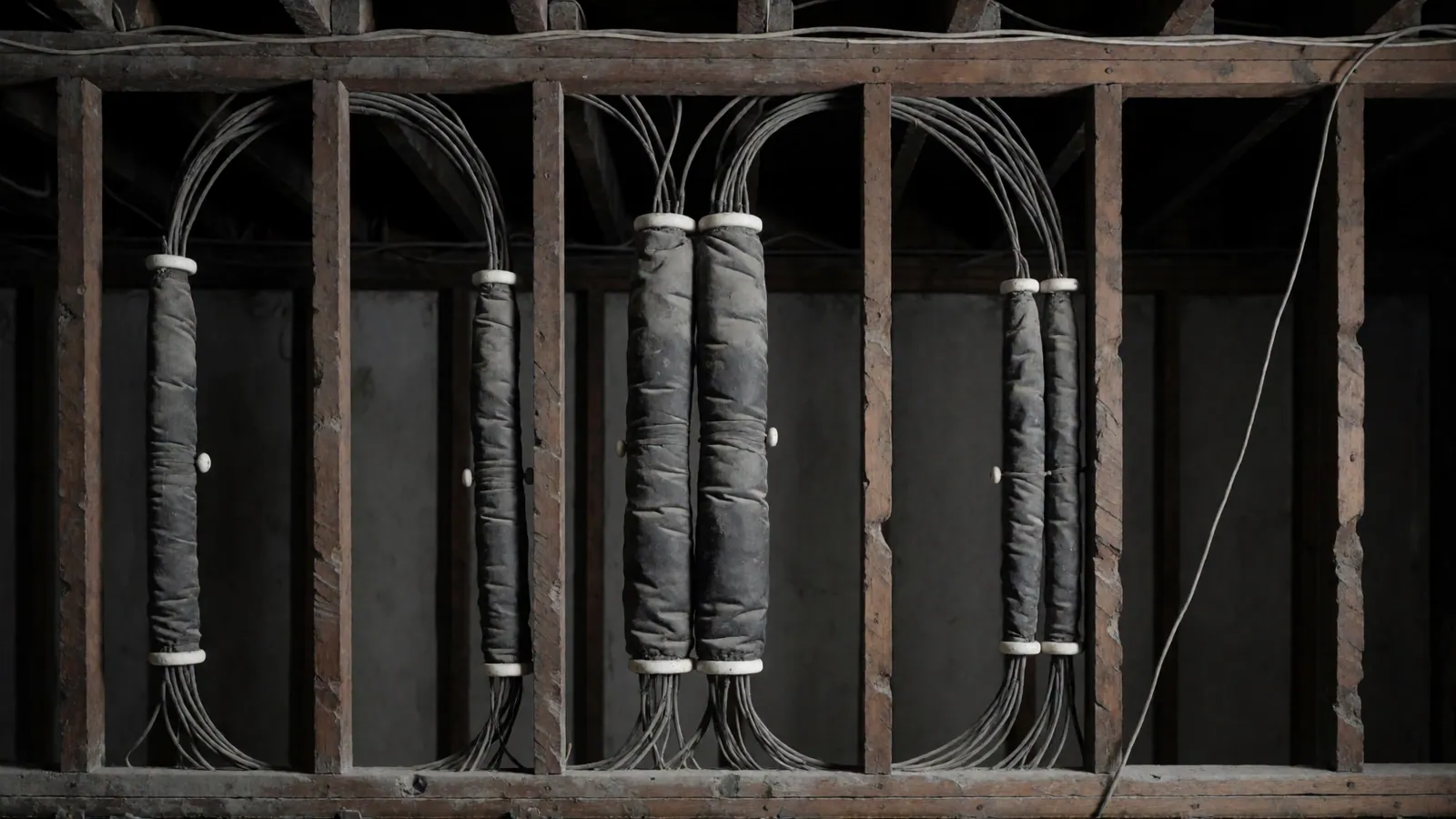
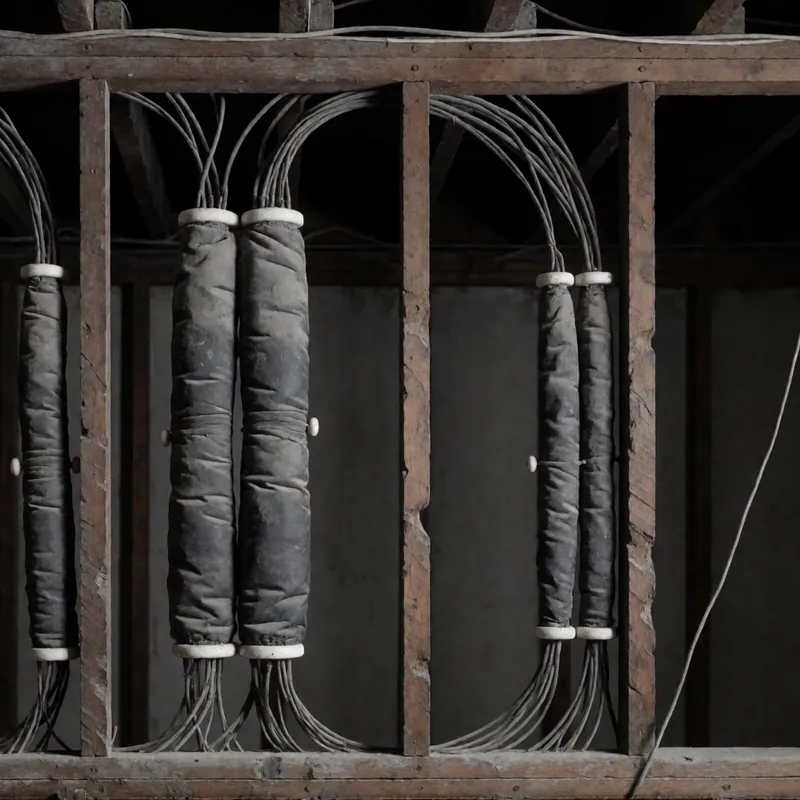
Knob-and-tube is the original wiring method of American houses: two separate conductors, insulated with cloth over rubber, held away from the timber on porcelain knobs and passed through porcelain tubes where they cross a joist. Installed properly, it was a sound system for its time, and a good deal of it has now been in service for a century.
It turns up here constantly — in Woodside, and even more in Ridgewood, where whole rows of pre-war two-families still have runs of it live above a finished ceiling. Often the house has been partly modernised and nobody realised that the back bedroom and the hall light were never done.
What the actual hazard is
It is not that the method was bad. Three things have gone wrong since.
The first is age: rubber and cloth insulation embrittles, cracks and falls off, particularly where it has been warm. Century-old insulation at a light fitting is often simply gone, leaving bare conductor.
The second is that it has no grounding conductor. Everything plugged into it has no fault path, and the two-prong receptacles that go with it have frequently been swapped for three-prong ones by somebody who did not think about what was behind them.
The third, and the one that causes fires, is what has been done to it since. This system depends on air around the conductors to carry heat away. Blown insulation packed into a joist bay, or a modern circuit spliced into it inside a wall cavity with no accessible box, defeats that. Most of the genuinely dangerous knob-and-tube we find was made dangerous in the 1970s, not in 1925.
What insurers actually ask
Insurers ask about knob-and-tube because it correlates with claims, and some will decline or surcharge a policy over it. What they generally want to know is whether any remains in service, and whether the house has been rewired.
This is worth getting right in writing, because “there is none” and “there is none that we could see” are different answers and only one of them is honest. Our survey says which one applies, names the areas we could not access, and gives you something you can send to an underwriter without overstating it.
Taking it out without gutting the house
The runs generally follow joist bays and stud cavities that are still the most direct route, so a surprising amount can be replaced by pulling new cable along the same path from an accessible attic or basement. Where a run is genuinely buried, we open a small number of chosen points rather than a wall.
One thing we do not do is leave the old wiring in place and energised while calling the job finished. Where a length has to stay physically in the structure because removing it would mean demolition, it is disconnected at both ends, made safe, and recorded in the paperwork as abandoned in place — so the next person to open that ceiling knows what they are looking at.
A report on what was reachable on the day. An electrical inspection is a report on what was accessible on the day. We cannot see inside a finished wall, under a floor we did not lift, or behind equipment we were not able to isolate, and no instrument we own sees through plaster. So we can tell you what we found and what we could not reach, and we will write down both. What we cannot do — what nobody can honestly do — is certify that a building is safe. Anyone offering you that is selling you a feeling.
Included as standard
What the job actually includes
A survey that says what could not be reached
Named areas, not a blanket assurance. This is the document your insurer actually wants.
Replacement along existing routes where possible
Minimising what has to be opened, which is where the cost lives.
Grounding conductors throughout the replaced work
The thing the original system never had.
Old runs disconnected at both ends
Never left energised. Anything left in the structure is recorded as abandoned in place.
Junctions in accessible boxes
No buried splices. The defect we most often inherit is somebody else's.
Filed and inspected
With the paperwork at the end of it.
When to call us
Signs this is the job you need
- Porcelain knobs or tubes visible in the basement ceiling or the attic
- Two separate cloth-covered conductors running a few inches apart
- Two-prong outlets, or three-prong ones with no ground behind them
- Blown-in insulation in a house that has never been rewired
- An insurer or a home inspector has raised it
- Warm switch plates, or lights that flicker on one particular circuit
Knob-and-tube replacement — what it costs
- Scales with how much of it is left, and how much of that is buried.$4,800 – $26,000
This is the range this job actually lands in, not a headline figure. The low end is a straightforward version of the work; the high end is one with a hard access problem, an old service, or something that has to be opened up before anybody can be certain. We tell you which one you have after we have looked, and the written quote says where the price could still move and why.
Questions we are actually asked
Knob-and-tube — frequently asked
Is knob-and-tube illegal?
No. Existing installations are generally permitted to remain where they are in sound condition, and it is not against the law to own a house that has some. What is not permitted is extending it, burying it in insulation, or splicing modern circuits into it in inaccessible places — and that is what we usually find.
Do I have to replace all of it?
Not necessarily, and we would rather stage it than frighten you into a whole-house job. The runs that matter most are the ones buried in insulation, the ones feeding heavily used circuits, and the ones whose insulation has already failed. We will rank them and you can decide the pace.
My insurer says I need a letter. Can you write one?
We can write you a survey report that states what we found, what we replaced, and — crucially — which areas we could not access. What we cannot do is certify that none remains anywhere in a house we cannot see inside. An honest report is what a good underwriter actually wants.
Related work
Often needed alongside this
Whole-house rewiring
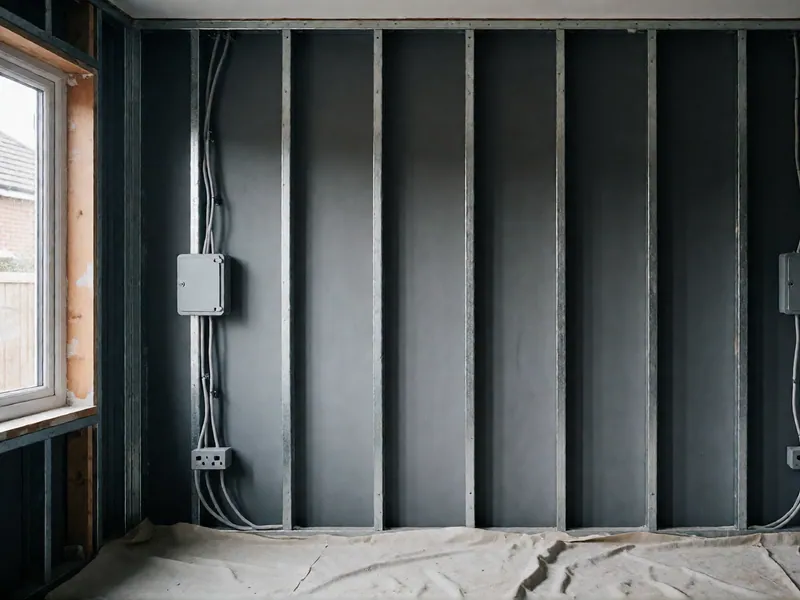
Replacing the wiring of an old Queens house in stages you can live through, room by room where that suits.
$14,000 – $42,000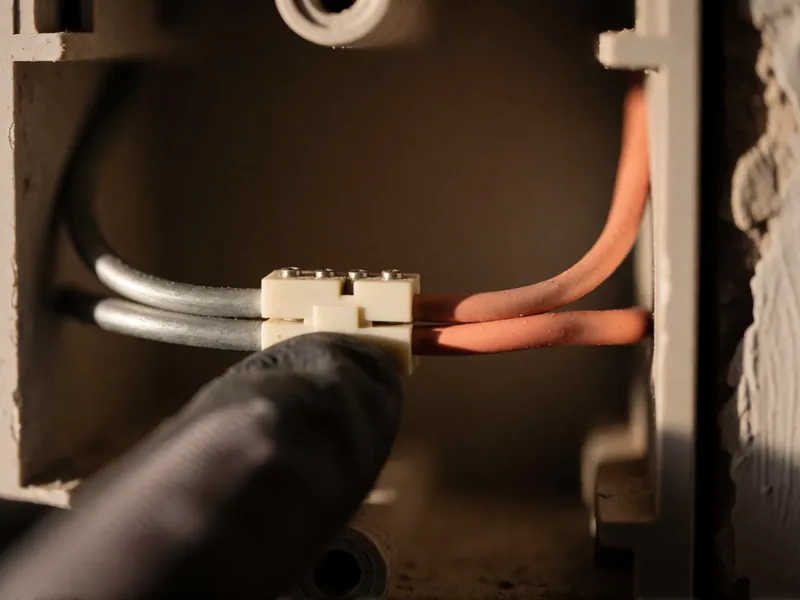
Aluminium wiring
The permanent repair the Consumer Product Safety Commission actually recommends — which is usually not a rewire.
$1,900 – $5,400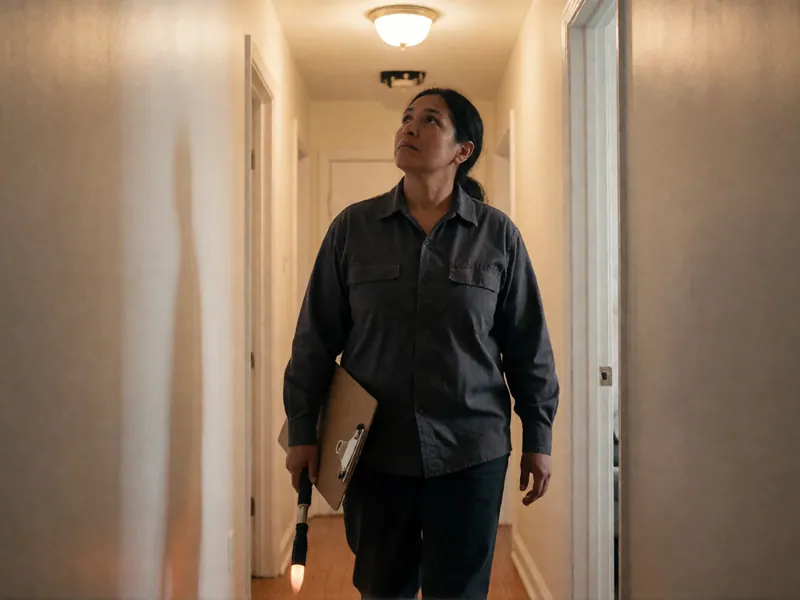
Safety inspections
A written report on what we found, what we could not reach, and what actually needs doing first.
$385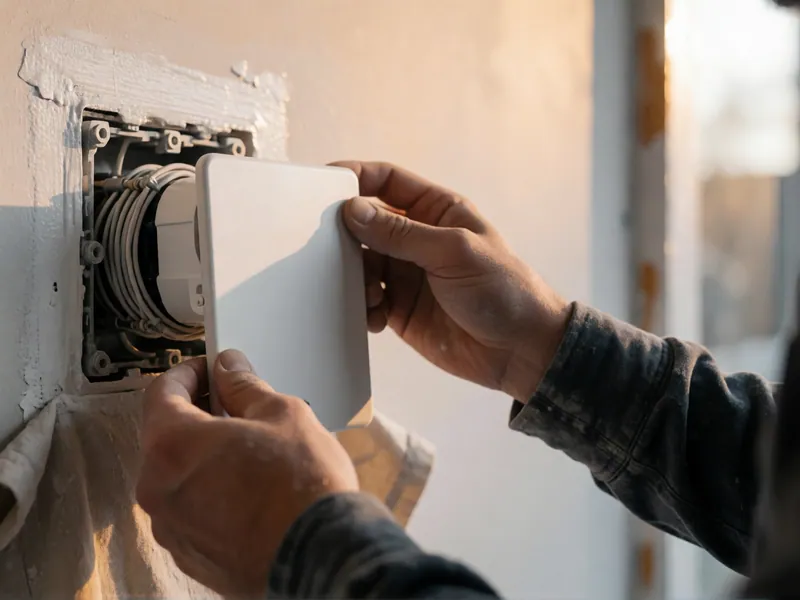
Outlets & switches
Adding, moving and replacing devices — including the two-prong outlets an old Queens house is still full of.
$145 – $420Somebody who does the work will come and look
Book a visit
Telephone the shop and you will get an electrician rather than a call centre. For defined work — a panel, a charger, a lighting scheme — the quote is free. For a fault, the visit is the diagnosis and it is $165 for the first hour, credited against the work if you go ahead the same visit. Either way we will tell you on the telephone which one it is.