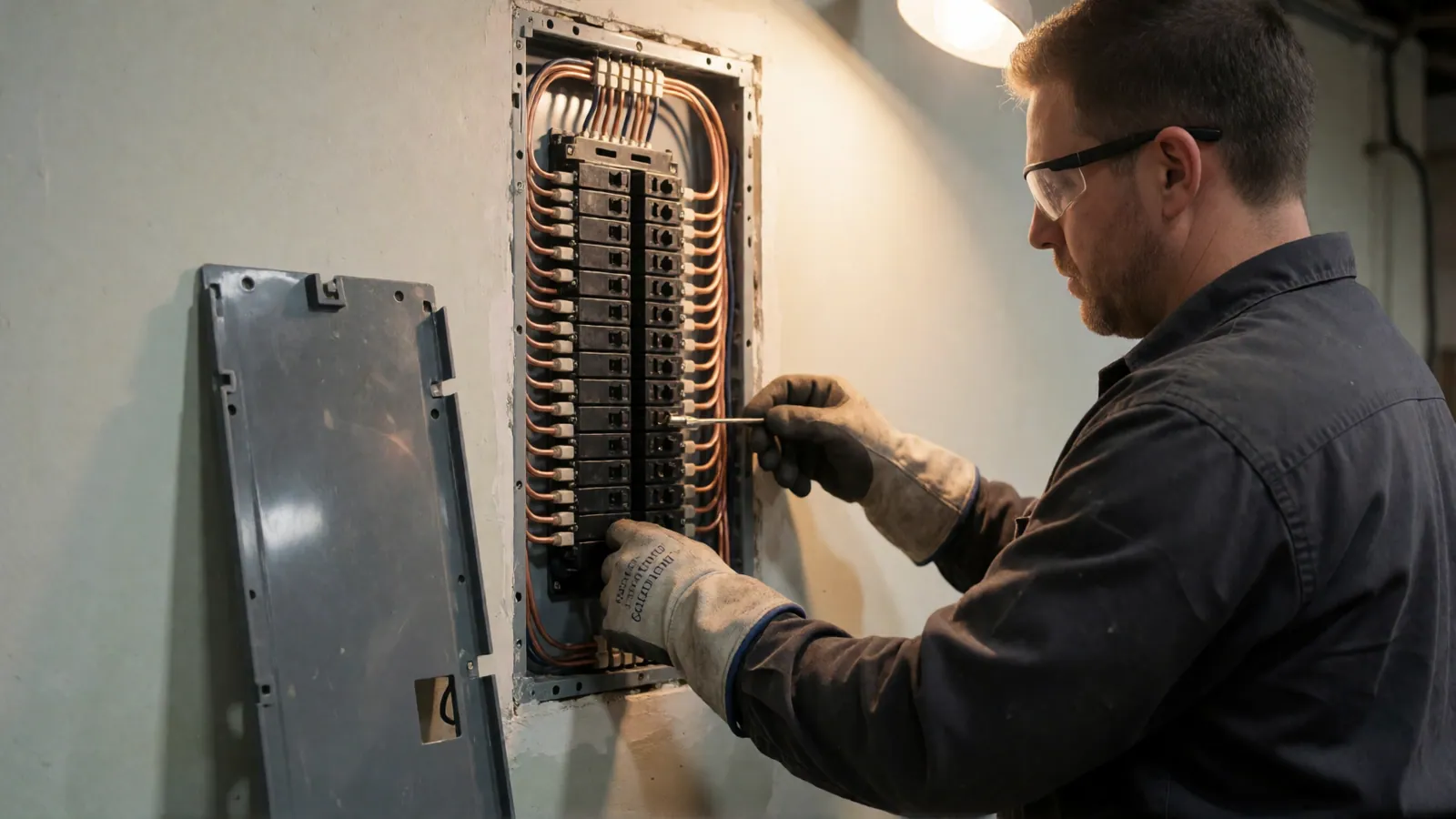
Panels & power
Electrical panel upgrades in Woodside, NY
Replacing the load centre is the single most common large job in an old Queens house, and it is also the job this trade most often sells to people who did not need it. Here is how we decide, what it costs, and what happens on the two days we are in your basement.
Your panel is the point where the utility's supply becomes your house's circuits. It carries the main disconnect, the breakers that protect each circuit, and the busbar everything lands on. When it is the right size, in good condition and correctly terminated, it is the most boring object in the building. When it is not, it is the one piece of equipment in your house whose failure mode is a fire inside a wall.
Most panels in Woodside houses are between twenty and sixty years old. Age alone is not a fault. What we are actually looking for is a specific list: makes with a documented failure history, corrosion from a damp basement or a leaking service entrance, terminations that have been running warm, double-tapped breakers, a busbar that has been arced, missing spaces for the circuits the house has since acquired, and a main breaker that is no longer rated for what the house draws.
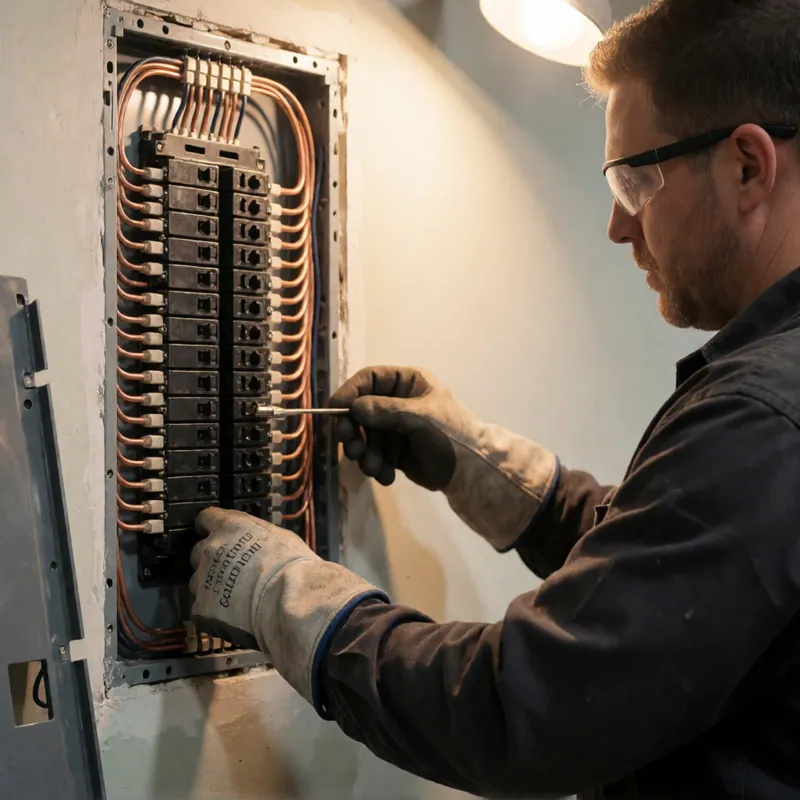
When a panel actually needs replacing
There are four honest reasons to replace a panel, and we will tell you which of them applies to yours before we quote anything.
The first is a documented defect. Federal Pacific Stab-Lok and Zinsco panels have a history of breakers that do not trip when they should, and the failure is latent — the panel works perfectly every day and lets you down on the one day it matters. We recommend replacing those on the evidence, and we will show you what we are looking at.
The second is physical condition: rust, water tracking, heat damage at the terminations, a busbar that has been arced, or a cabinet that has been cut about so many times it can no longer be closed up properly. The third is capacity — you are out of spaces, and the workarounds already in there (tandem breakers where they are not listed, two conductors under one lug) are themselves a problem. The fourth is that you are doing something else anyway: a service upgrade, a rewire, a kitchen, an EV charger that tips the calculation over.
What is not on that list: the panel is old, the panel is a make you have not heard of, or somebody told you on the doorstep that it was dangerous.
Replacing the panel is not the same as upgrading the service
These get sold together and they are different jobs. Replacing the panel swaps the distribution equipment while keeping the same supply — same service conductors, same meter, same amperage. Upgrading the service increases how much power the house can draw, which means the utility is involved, and usually the mast, the meter pan and the grounding electrode system as well.
Plenty of houses need the first and not the second. If your existing 100 amp service comfortably covers a load calculation for the house as it is actually used, a new panel at 100 amps is a complete job and thousands of dollars cheaper. We do the calculation before we quote, so nobody is guessing. If you do need both, the service upgrade page covers the second half.
What the two days look like
Day one is preparation: the new cabinet is set, the grounding and bonding is brought up to current requirements — which in an old house is frequently the largest single improvement in the whole job — and everything that can be done live is done live.
Day two is the changeover. Power is off for most of it. Every circuit is identified, tested, re-terminated to the correct torque and landed on the new busbar, and the directory is made out properly, by circuit and by room, rather than the guesswork you inherited. Arc-fault and ground-fault protection goes on the circuits that now require it. Then everything is energised one circuit at a time and tested.
The inspection happens after that. We arrange it, attend it and close it out, and you get the paperwork. If you are ever asked at a sale or a refinance whether the panel work was permitted, the answer will be in a file with a number on it.
We do not sell panels on fear. An old panel is not automatically a dangerous panel. Two specific makes — Federal Pacific Stab-Lok and Zinsco — have a documented history of breakers that fail to trip on an overload, and we will recommend replacing those on the evidence. A sound forty-year-old panel from a maker with no such history is a different conversation, and so is aluminium branch wiring, which the Consumer Product Safety Commission says can be permanently repaired at the connections rather than torn out. Nobody here will tell you your house is about to burn down in order to sell you a panel. If we recommend a replacement we will give you the specific reason, show you the thing we are talking about, and put it in writing.
Included as standard
What the job actually includes
The load calculation first
Before anything is quoted, so the panel we fit is the panel the house needs rather than the biggest one we can sell.
The filing
Filed with the Department of Buildings under the licence, before work starts.
Grounding and bonding brought up to date
In a house of this age this is usually the part that most improves your actual safety, and it is included rather than an extra.
Every circuit identified and labelled
By circuit and by room, tested rather than assumed. You will be able to find the right breaker in the dark.
AFCI and GFCI where now required
Applied to the circuits the code now covers, and explained rather than just billed.
The inspection, arranged and attended
Including the sign-off and the paperwork at the end of it.
Two years on our workmanship
In writing. Separate from any manufacturer's warranty on the equipment itself.
When to call us
Signs this is the job you need
- Breakers that trip with nothing unusual running, or one that will no longer stay in
- A warm cover, a burning or fishy smell near the panel, or a buzz that was not there before
- Rust inside the cabinet, or water tracking down the wall behind it
- Two conductors under a single breaker lug, or tandem breakers in a panel not listed for them
- No spare spaces left, and a job coming that needs one
- A Federal Pacific Stab-Lok or Zinsco panel — the two makes with a documented history
Electrical panel upgrades — what it costs
- Panel replacement at the existing service size, permit and inspection included.$3,400 – $6,800
This is the range this job actually lands in, not a headline figure. The low end is a straightforward version of the work; the high end is one with a hard access problem, an old service, or something that has to be opened up before anybody can be certain. We tell you which one you have after we have looked, and the written quote says where the price could still move and why.
Questions we are actually asked
Panel upgrades — frequently asked
Will my power be off the whole time?
No. Power is off for most of one day — the changeover day — and we tell you which day in advance so you can plan around it. Day one is preparation and the house stays live for nearly all of it.
Do I need a permit to replace a panel in New York City?
Yes, and only a licensed Master or Special Electrician can file it. A homeowner cannot pull an electrical permit here. Anybody offering to change your panel without a filing is offering you unpermitted work.
Should I go to 200 amps while you are in there?
Only if the load calculation says so. It is a genuinely good moment to do it if you need it, because some of the work overlaps. But it is a different job with the utility involved, and we are not going to add it to the quote because the moment was convenient.
Related work
Often needed alongside this
Service upgrades
Taking a house from 100 amps to 200, including the mast, the meter pan and the utility coordination.
$5,200 – $11,500
Load calculations
The arithmetic that decides whether you need a service upgrade at all — done before anybody quotes you one.
$340
Breakers & protection
Nuisance trips, dead circuits, and bringing arc-fault and ground-fault protection up to where the code now expects it.
$185 – $520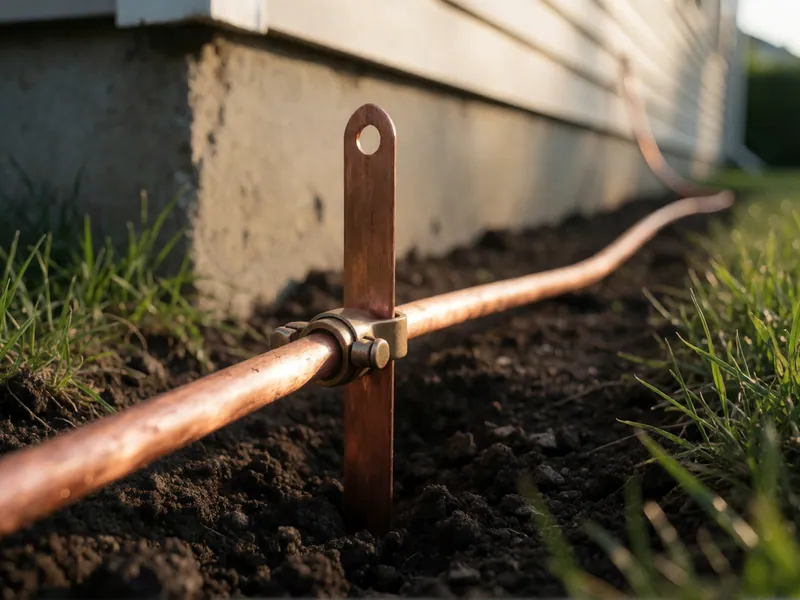
Grounding & bonding
The part of your system that does nothing at all until the day it is the only thing between you and a fault.
$285 – $2,200Somebody who does the work will come and look
Book a visit
Telephone the shop and you will get an electrician rather than a call centre. For defined work — a panel, a charger, a lighting scheme — the quote is free. For a fault, the visit is the diagnosis and it is $165 for the first hour, credited against the work if you go ahead the same visit. Either way we will tell you on the telephone which one it is.