Wiring & rewiring
New circuits and dedicated lines in Woodside, NY
When a circuit keeps tripping, the answer is almost never a bigger breaker and almost always another circuit. This is the job that quietly fixes more household electrical complaints than any other.
A dedicated circuit runs from its own breaker in the panel to one place, and shares with nothing. That is what a window air-conditioner, a microwave, a dryer, a workshop bench or a home office full of equipment actually wants — and it is what an old Queens house, built when a bedroom needed one lamp, almost never has.
The alternative that gets offered is spurring off whatever is nearest. It is quicker, it is cheaper on the day, and it is how you end up with a kitchen, a bathroom fan and a bedroom on the same fifteen amps, tripping every time somebody makes toast.
Where the cost actually goes
Almost none of the price is the breaker or the outlet. It is the route: getting cable from the panel to where you want it, through a building that would rather you did not.
A circuit from a basement panel to a first-floor room directly above it is at the cheap end of the range. The same circuit to a third-floor rear bedroom, in a house with a finished basement ceiling and no accessible chase, is at the top of it — and might genuinely be better solved with a subpanel if you want several.
We will tell you which one you have before quoting, and if the answer is that you should be thinking about a subpanel instead, we will say that too.
The circuits people most often need
Window and through-wall air conditioners, which draw hard on start-up and are the single most common cause of summer nuisance tripping in Woodside. Kitchen small-appliance circuits, where two are required and old houses have half of one. Laundry, dryer and dishwasher circuits. A home office, where the real complaint is usually the space heater rather than the computers. Workshop and garage circuits. And bathroom circuits, which need their own supply and ground-fault protection.
Included as standard
What the job actually includes
A route chosen before the quote
So the price reflects the actual run, not an optimistic guess about what is behind a wall.
Correct conductor for the load and the length
Including voltage drop on a long run, which is what gets skipped.
Its own breaker, correctly rated
Sized to the conductor. Never sized to stop something tripping.
Protection where required
Arc-fault and ground-fault applied where the code calls for it on new work.
Boxes accessible
Every junction in a box you can get to. No buried splices, ever.
Directory updated
The new circuit written into the panel directory properly.
Filed and inspected
New circuits require it.
When to call us
Signs this is the job you need
- A breaker that trips whenever two particular things run together
- A new air conditioner, dryer, range, dishwasher or wall oven going in
- Extension leads doing permanent work anywhere in the house
- A home office, workshop or garage that keeps taking the room's lighting out with it
- A kitchen with one small-appliance circuit where there should be two
- Lights that dim when the refrigerator or the air conditioner starts
New circuits and dedicated lines — what it costs
- Per circuit. The length of the run is what moves it.$420 – $1,300
This is the range this job actually lands in, not a headline figure. The low end is a straightforward version of the work; the high end is one with a hard access problem, an old service, or something that has to be opened up before anybody can be certain. We tell you which one you have after we have looked, and the written quote says where the price could still move and why.
Questions we are actually asked
New circuits — frequently asked
Is it cheaper if you do several at once?
Yes, meaningfully — the set-up, the panel work and the making good are shared. If you know you will want three over the next two years, doing them in one visit is the cheaper decision and we will price it that way.
Do I need a permit for one new circuit?
Yes. New circuits are new work and are filed. Replacing an existing device on an existing circuit is maintenance and is not. We will tell you which yours is before you commit.
Can you run it without opening walls?
Often, using basements, attics, closet stacks and existing chases — that is most of the skill. Sometimes not, and where we have to open something we will show you where and how big before we start, not after.
Related work
Often needed alongside this
Subpanels & feeders
A second distribution point for a finished basement, an attic conversion, a garage or a rental unit.
$1,600 – $4,200
Appliance circuits
Ranges, dryers, wall ovens, mini-splits and window units, each on the circuit its nameplate actually asks for.
$520 – $1,800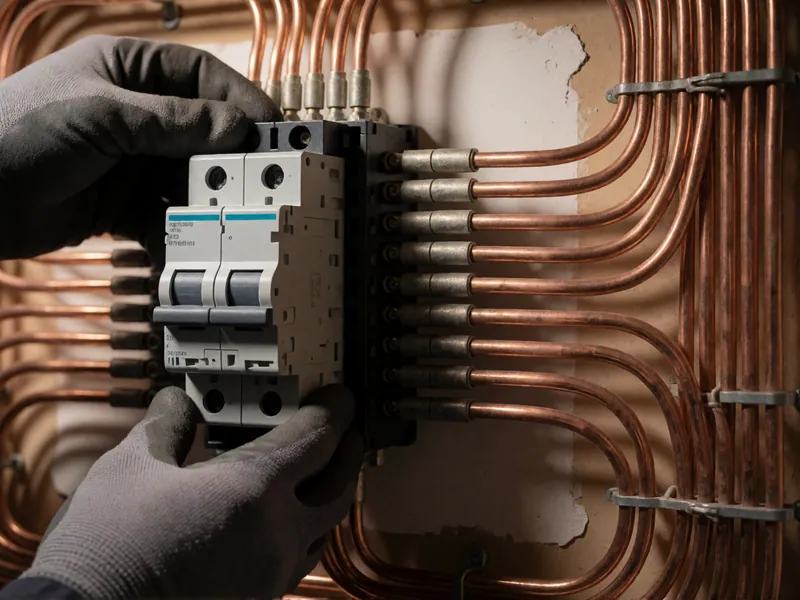
Breakers & protection
Nuisance trips, dead circuits, and bringing arc-fault and ground-fault protection up to where the code now expects it.
$185 – $520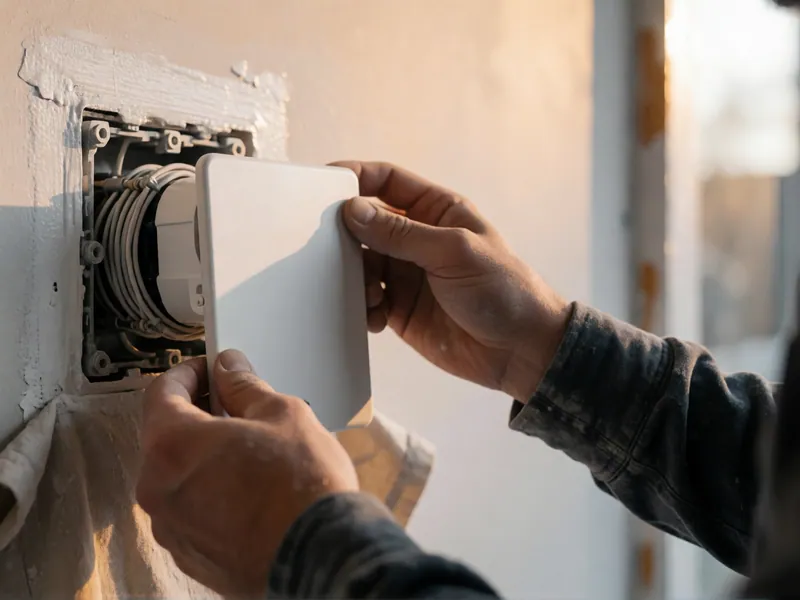
Outlets & switches
Adding, moving and replacing devices — including the two-prong outlets an old Queens house is still full of.
$145 – $420Somebody who does the work will come and look
Book a visit
Telephone the shop and you will get an electrician rather than a call centre. For defined work — a panel, a charger, a lighting scheme — the quote is free. For a fault, the visit is the diagnosis and it is $165 for the first hour, credited against the work if you go ahead the same visit. Either way we will tell you on the telephone which one it is.