Grounding, safety & testing
Whole-home surge protection in Woodside, NY
A device at the service catches what comes in from outside. It does not catch what your own refrigerator does to the circuit your computer is on. Both layers are real, and selling one as the other is how this gets oversold.
A surge protective device at the service entrance clamps voltage transients arriving on the incoming supply — utility switching, a nearby lightning strike, the grid doing something abrupt — and diverts them to the grounding system before they reach your circuits. It is a genuinely worthwhile thing to fit, particularly now that so much of what is in a house is electronic.
It is also routinely sold with claims it cannot support. Here is what it will not do: it will not stop a direct lightning strike on the building, it will not protect against surges generated inside your own house, and it will not do anything useful at all if the grounding system it diverts into is not sound — which, in a lot of Queens houses, it is not.
Why it depends entirely on your grounding
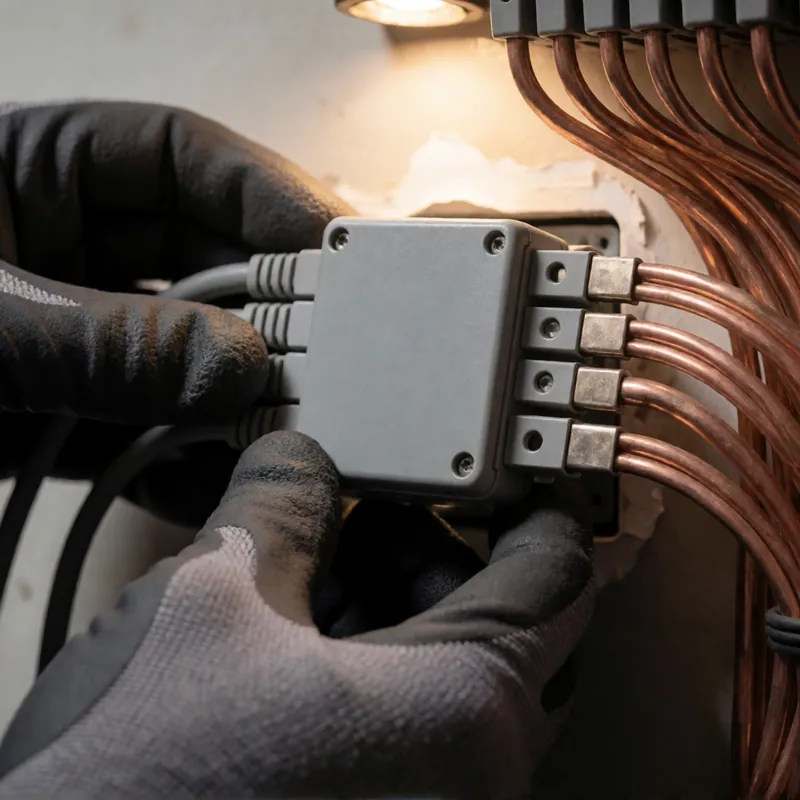
A surge device works by giving a transient somewhere better to go than through your equipment. “Somewhere better” is the grounding electrode system and the bonding. If the water-pipe electrode now terminates on plastic pipe, or the bonding jumpers are missing, the device has been given nowhere to divert anything to.
So we check the grounding before quoting the device, every time. If the grounding needs work, that is the job that has to happen first, and we would rather tell you that than sell you a device that will sit there looking reassuring and doing very little.
The second layer, which is the one people skip
Most of the surge events that damage domestic electronics are generated inside the building — a motor starting, a compressor cycling, an old thermostat. A service-entrance device is on the wrong side of the house to help with those.
The answer is a good point-of-use protector at the equipment you care about, which is a twenty-dollar item you buy yourself and we make nothing on. We mention it because a two-layer arrangement is what actually works, and we would rather tell you the cheap half than let you believe the expensive half is complete.
There is no box that makes electricity cheaper. We do not sell energy-saving boxes, power-factor correction units, or anything else that plugs into an outlet and promises to cut your bill. A home meter bills real power in kilowatt-hours, and no device plugged into a receptacle changes how much of that your refrigerator, your dryer or your air conditioner uses. Lighting retrofits do save money, and the saving is arithmetic we will do in front of you with your own fixture count and your own rate — not a percentage off a marketing sheet. If the arithmetic does not pay back, we will say so, and you should not do the job.
Included as standard
What the job actually includes
Grounding checked first
Because the device is worthless without it. If it needs work, we tell you before quoting the device.
Fitted at the service equipment
On its own breaker, with the shortest practical leads — lead length materially affects how well it works.
Sized to the service
Rather than to whatever the biggest number on the shelf is.
Explained honestly
What it protects against, what it does not, and what the point-of-use layer is for.
Filed where required
As with any other work at the service equipment.
When to call us
Signs this is the job you need
- Repeated failures of electronics with no other explanation
- A house full of expensive equipment — home office, media, medical devices
- A panel replacement or service upgrade already happening, which is the cheap moment to add it
- Frequent utility interruptions or visible voltage fluctuation
- A standby generator being installed, which introduces its own transfer transients
Whole-home surge protection — what it costs
- Fitted at the service equipment, including the dedicated breaker.$540 – $980
This is the range this job actually lands in, not a headline figure. The low end is a straightforward version of the work; the high end is one with a hard access problem, an old service, or something that has to be opened up before anybody can be certain. We tell you which one you have after we have looked, and the written quote says where the price could still move and why.
Questions we are actually asked
Surge protection — frequently asked
Will this protect against a lightning strike?
Against the induced surge from a nearby strike, largely yes. Against a direct strike on your building, no — nothing in this price range does, and we are not going to imply otherwise.
Does it need replacing?
The protective components degrade as they absorb events, and most devices have an indicator showing whether they are still functioning. It is worth a look during any other visit, and it is not an annual-contract item.
Is it worth it?
Fitted alongside sound grounding, and treated as one of two layers rather than a complete answer, it is reasonable value — particularly if it goes in during a panel job when the labour is largely already paid for. As a standalone purchase on a house with questionable grounding, it is not, and we will say so.
Related work
Often needed alongside this
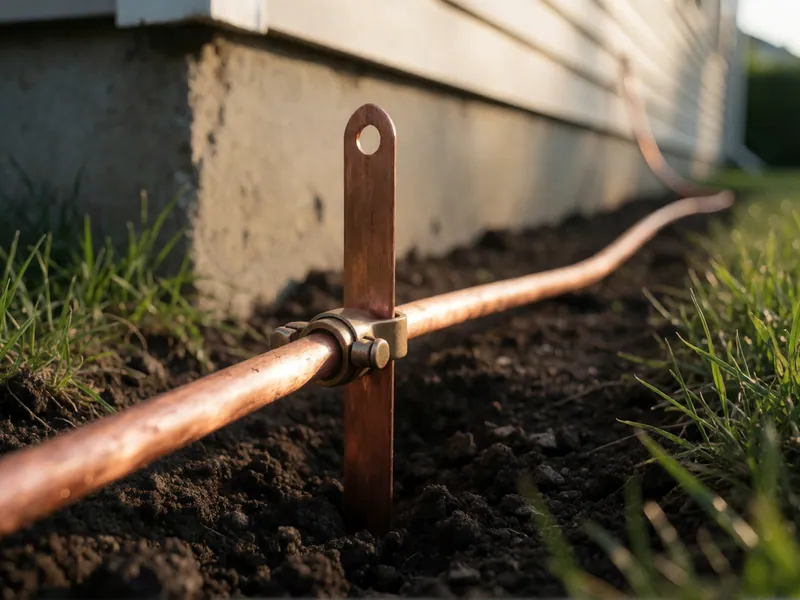
Grounding & bonding
The part of your system that does nothing at all until the day it is the only thing between you and a fault.
$285 – $2,200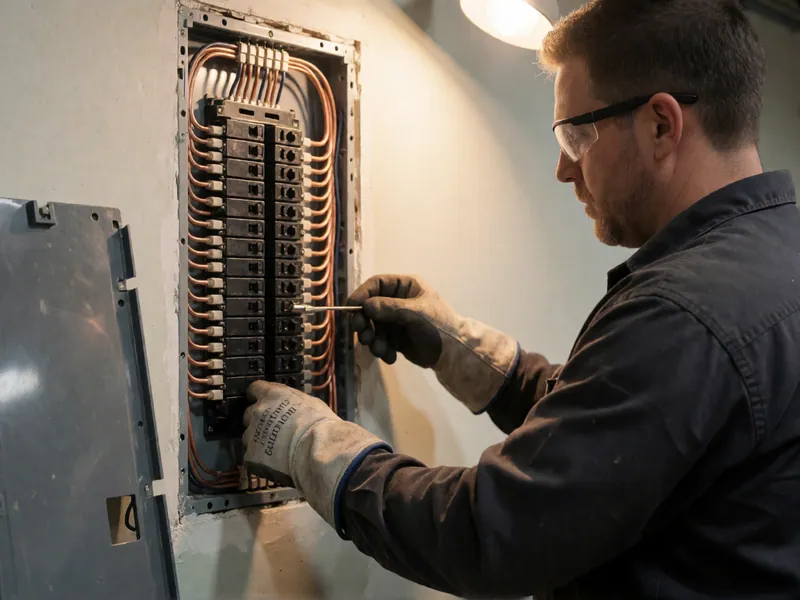
Panel upgrades
Replacing a tired or undersized load centre with a modern one — filed, inspected, and done in a day and a half.
$3,400 – $6,800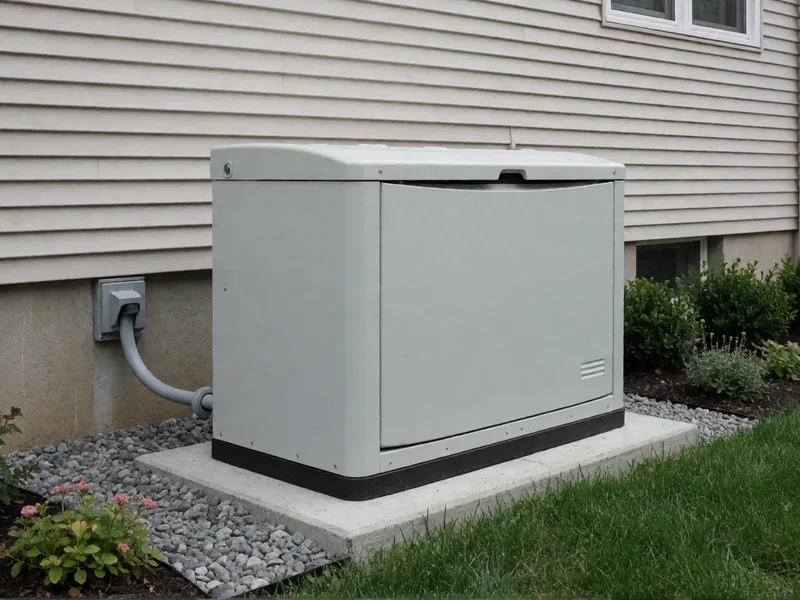
Generators
From a mechanical interlock for the portable you already own, to a permanently installed standby set.
$780 – $16,000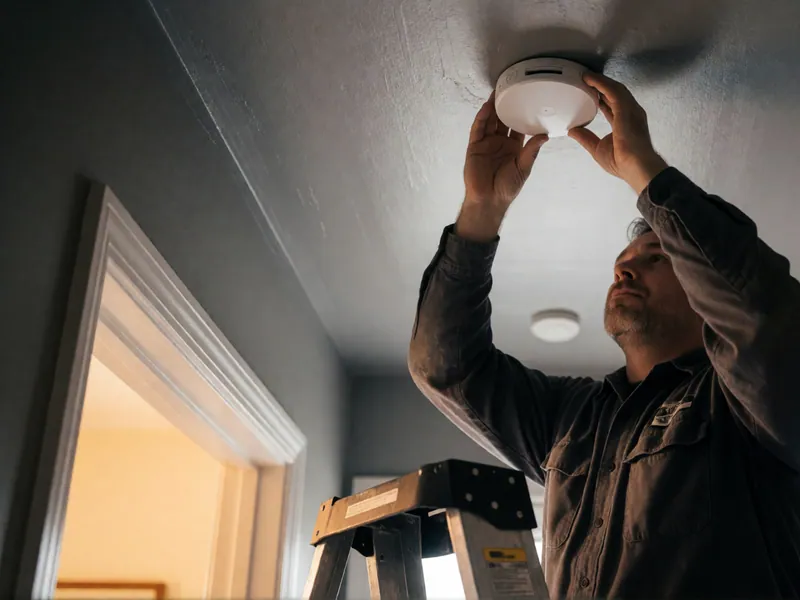
Smoke & CO alarms
Interconnected, mains-powered alarms on every level, sited where they will actually hear a fire.
$180 – $340Somebody who does the work will come and look
Book a visit
Telephone the shop and you will get an electrician rather than a call centre. For defined work — a panel, a charger, a lighting scheme — the quote is free. For a fault, the visit is the diagnosis and it is $165 for the first hour, credited against the work if you go ahead the same visit. Either way we will tell you on the telephone which one it is.