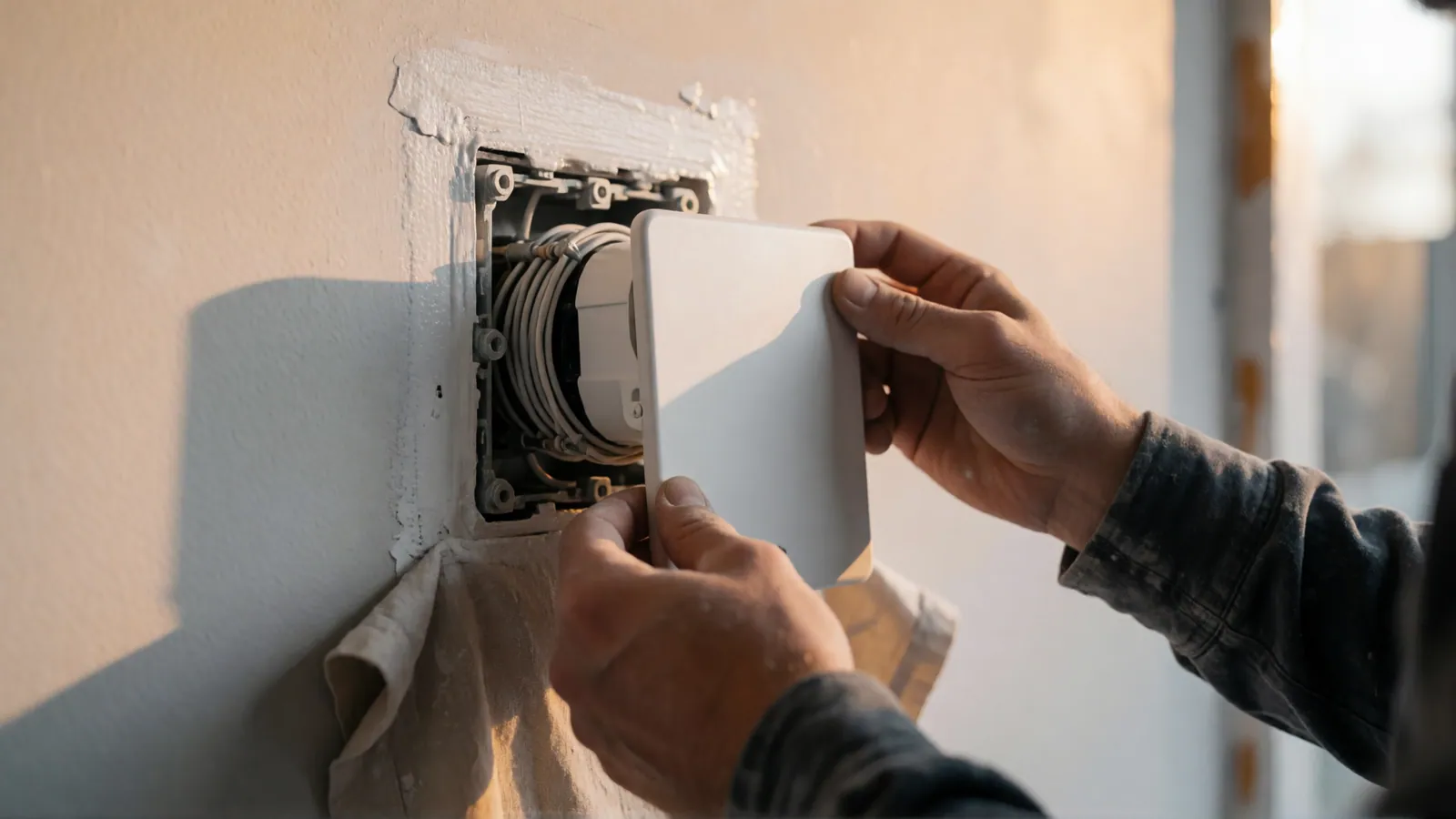
Lighting & devices
Outlets, switches and dimmers in Woodside, NY
The smallest job in this trade, and the one where a shortcut is most likely to be taken — because the difference between doing it properly and doing it quickly is completely invisible once the cover plate is on.
Adding an outlet where the extension lead lives, moving a switch to the side of the door people actually walk through, replacing a switch with a dimmer, or swapping the yellowed devices in a whole house — this is most people's first job with an electrician, and it is worth doing carefully.
It is also where the standing defect of American domestic wiring lives: the backstab. Most receptacles have push-in holes on the back as an alternative to the screw terminals on the side. They are faster, they are permitted, and they loosen over decades. A very large share of the dead circuits and warm outlets we are called to are a backstab that has finally let go.
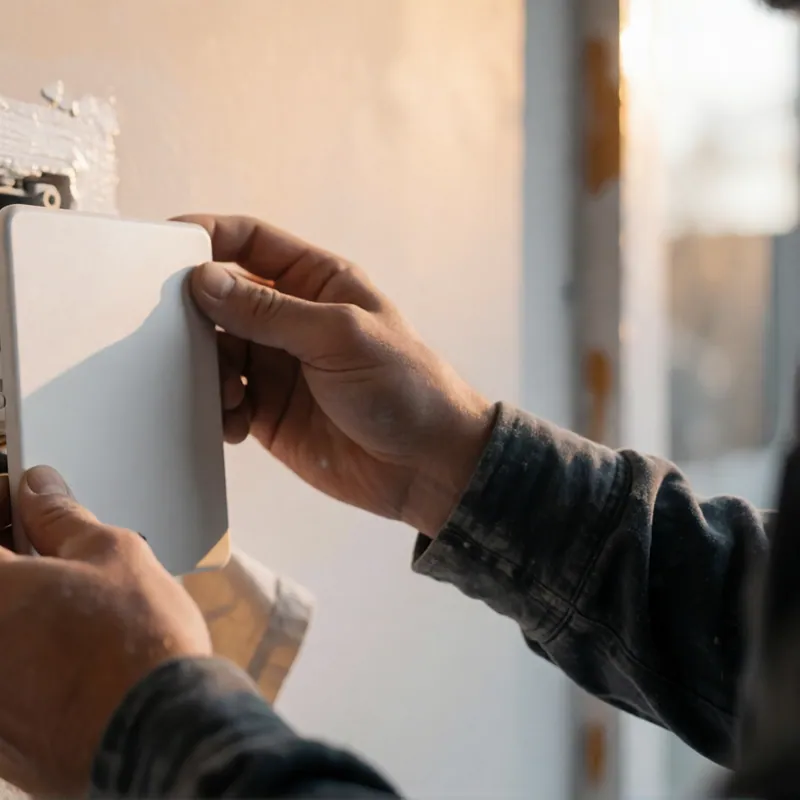
Two-prong outlets, and the three wrong answers
Old Queens houses are full of two-prong receptacles on two-wire circuits with no equipment grounding conductor. There are correct ways to deal with that and several popular wrong ones.
The wrong one we find most: somebody has simply fitted a three-prong receptacle. Everything now plugs in, nothing is grounded, and every appliance with a metal case is relying on protection that is not there. The second wrong one: a jumper from the neutral to the ground terminal, creating a false ground that will energise the case of your appliance under exactly the fault it is supposed to protect you from. That one is genuinely dangerous.
The correct answers are: run a grounding conductor and do it properly; or protect the circuit with a ground-fault device and label the outlets as having no equipment ground, which is a recognised approach and is honest about what it is; or replace with two-prong receptacles, which nobody wants but is at least truthful. We will explain which applies to your house and what each costs.
Dimmers, and why yours buzzes
A dimmer and an LED fitting have to be compatible, and a great many pairs are not. The symptoms are flicker at low levels, a buzz from the dimmer or the lamp, a limited usable range, or lamps that will not go off completely.
It is usually the dimmer, occasionally the lamp, and sometimes the combination of a low total load with a dimmer designed for far more. We fit dimmers matched to what they are driving, and where somebody else's installation is buzzing we can generally fix it by changing one component rather than the lot.
No instructions here, and here is why. You will not find step-by-step instructions on this website for working on your own electrical system, and that is deliberate. The hazard in this trade is not that the work is difficult; it is that the circuit is still live, or that the thing you switched off is not the thing you are touching. Turning power off at a panel and proving it is off are two different acts, and the second one is what keeps people alive. We are glad to explain what we are doing, and why, while we do it.
Included as standard
What the job actually includes
Screw terminations
Never backstabs. The single most common cause of the dead circuits we get called to.
Grounding tested before and after
Measured, not inferred from the presence of a third pin.
Ground-fault protection where required
Bathrooms, kitchens, laundry, basements, garages and outdoors.
Boxes checked for fill and condition
An overfull or broken box gets replaced rather than closed back up.
Dimmers matched to the load
So it does not buzz, flicker or refuse to switch fully off.
Cheaper per device in a batch
Most of the cost is turning up. Doing eight at once is far better value than eight visits.
When to call us
Signs this is the job you need
- Two-prong outlets, or three-prong ones with nothing behind them
- An outlet that has stopped working, or works only intermittently
- A warm cover plate or a scorch mark at a plug
- Plugs that fall out of a worn receptacle under their own weight
- Extension leads doing permanent work
- Dimmers that buzz, flicker, or will not switch fully off
Outlets, switches and dimmers — what it costs
- Per device, and less per device when several are done in one visit.$145 – $420
This is the range this job actually lands in, not a headline figure. The low end is a straightforward version of the work; the high end is one with a hard access problem, an old service, or something that has to be opened up before anybody can be certain. We tell you which one you have after we have looked, and the written quote says where the price could still move and why.
Questions we are actually asked
Outlets & switches — frequently asked
Can you just swap my two-prong outlets for three-prong ones?
Not on their own, no — that gives you the appearance of a ground with nothing behind it, and every appliance with a metal case then relies on protection that is not there. There are three legitimate answers and we will explain which fits your house. This is one of the few places on this site where we will decline to do what is asked.
Why is one device so expensive when the part costs a few dollars?
Because almost all of the cost is a licensed electrician turning up, and almost none of it is the part. That is why the price per device drops sharply when several are done in one visit — if you have a list, save it up.
My outlet sparks when I plug something in. Is that bad?
A brief small spark as contacts meet on a load being connected is normal. Persistent sparking, a spark with nothing being plugged in, browning around the slots, or warmth is not, and it should be looked at rather than lived with.
Related work
Often needed alongside this
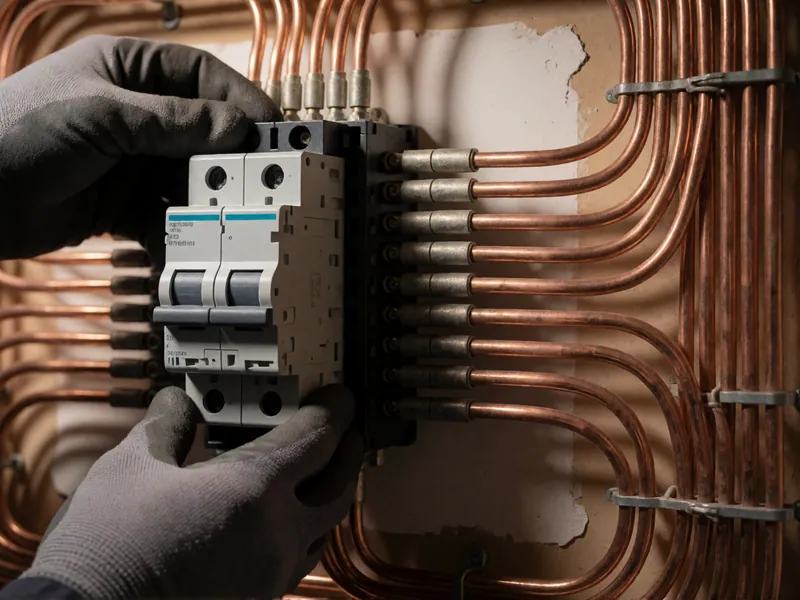
Breakers & protection
Nuisance trips, dead circuits, and bringing arc-fault and ground-fault protection up to where the code now expects it.
$185 – $520
New circuits
A circuit for the window unit, the home office, the dryer or the workshop — run properly, rather than spurred off something.
$420 – $1,300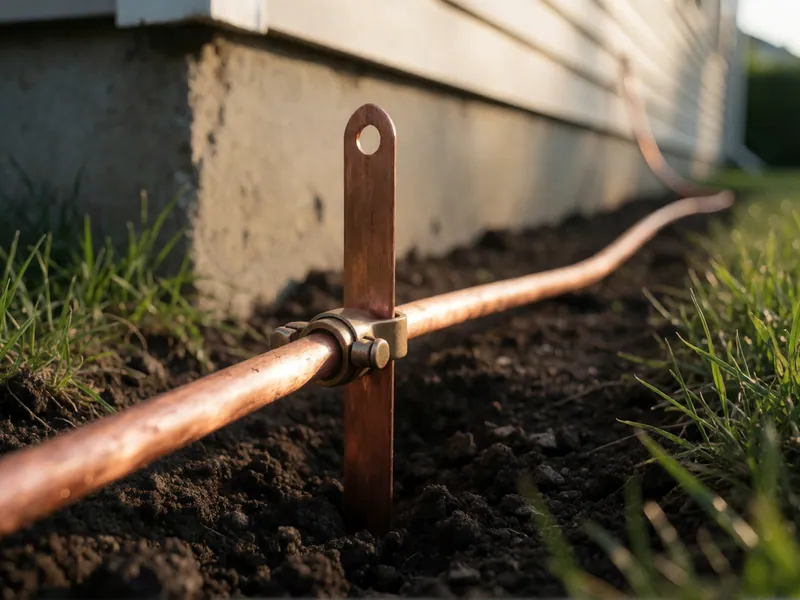
Grounding & bonding
The part of your system that does nothing at all until the day it is the only thing between you and a fault.
$285 – $2,200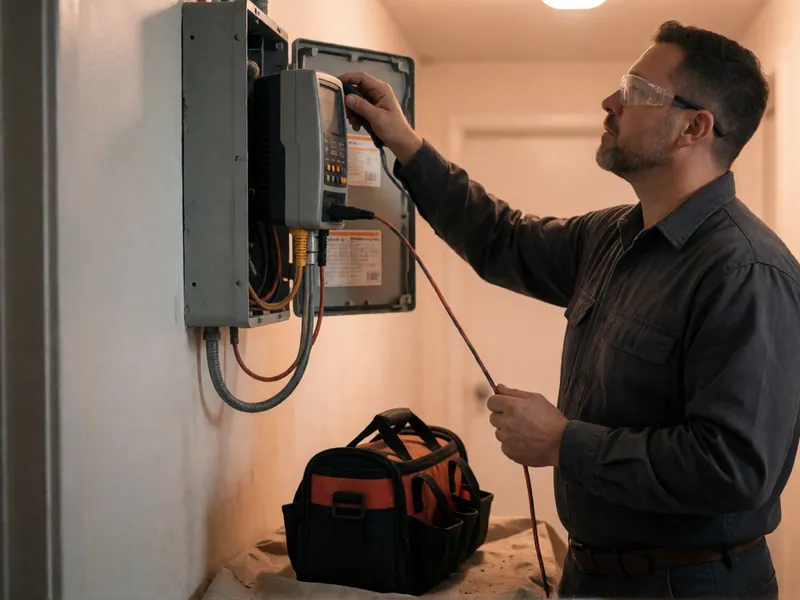
Troubleshooting
Half the house dark, a breaker that will not stay in, a smell you cannot place. Diagnosis first, quote second.
$165Somebody who does the work will come and look
Book a visit
Telephone the shop and you will get an electrician rather than a call centre. For defined work — a panel, a charger, a lighting scheme — the quote is free. For a fault, the visit is the diagnosis and it is $165 for the first hour, credited against the work if you go ahead the same visit. Either way we will tell you on the telephone which one it is.