Panels & power
Service upgrades to 200 amps in Woodside, NY
Increasing what the house can draw touches the utility, the mast, the meter, the panel and the grounding electrode system all at once. It is the biggest single electrical job most houses ever have — and the one most often recommended to people who did not need it.
A service upgrade raises the amount of power the utility will deliver to the building. In practice that means new service conductors, a new meter pan, usually a new mast and weatherhead, a new main disconnect and panel, and a grounding electrode system brought up to what a 200 amp service requires. It is coordinated with the utility, filed with the Department of Buildings, and inspected at the end.
It is also expensive, disruptive, and frequently sold to people whose houses did not need it. The honest starting point is arithmetic, not a sales visit: a load calculation on the house as it is actually used and as you intend to use it. Plenty of Woodside two-families run comfortably on their existing service. Plenty of others ran out of capacity two renovations ago and nobody said so.
When you genuinely need one
The clearest case is arithmetic: the calculated load exceeds what the existing service can carry. That usually arrives with something specific — electric heat, a second kitchen, a heat pump, a workshop, a rental unit being brought back into use, or an EV charger on a house that was already close to the line.
The second case is condition. Old service equipment gets to a point where the mast is corroded, the meter pan is unsafe, or the service entrance conductors have degraded. At that point you are replacing the service anyway, and going to 200 amps while it is open is usually the cheaper long-term decision even if you do not need the capacity today.
The third is that the utility or an inspector has told you to. That one is not a judgement call.
When you probably do not
If somebody has told you that you need 200 amps because 100 amps is “not enough for a modern home”, ask them for the calculation. Modern homes are in aggregate less electrically hungry than they were in 1975, because lighting collapsed from hundreds of watts a room to tens, and because appliances got dramatically more efficient. A 100 amp service with gas heat and gas cooking in a one-family Queens house is very often fine.
The place this genuinely changes is electrification. If you are moving from gas to a heat pump, adding an induction range, and charging a car, the arithmetic changes quickly and you may well need the upgrade. Our answer is the same either way: do the calculation, then decide.
What the utility controls, and what we do
We do not control the utility's schedule and will not pretend to. What we control is everything on your side of the meter, the filing, the inspection and the coordination — and telling you honestly where the job currently sits rather than letting you find out.
Practically, the sequence is: load calculation and survey, filing, our work on the mast, meter pan, panel and grounding, the utility's disconnection and reconnection, then the inspection and sign-off. Power is off for a working day at the changeover. Where the meter has to move — which happens more often than people expect on older Queens houses — that adds a day and some masonry.
Filed with the Department of Buildings, or not done. In New York City, electrical work is filed with the Department of Buildings by a licensed Master or Special Electrician, and the finished work is signed off after an inspection. A homeowner cannot pull an electrical permit here, and neither can an unlicensed handyman. If somebody offers to do your panel or your rewire cheaper by leaving the filing out, what they are selling you is unpermitted work: it is illegal, your insurer can decline a fire claim over it, and it surfaces at the worst possible moment, which is the day you sell or refinance. We file for everything that requires filing. When a job genuinely does not require a permit we will tell you that too, and we will tell you why.
Included as standard
What the job actually includes
Load calculation and survey
Done before the quote, so the decision rests on arithmetic. $340, credited in full against the work.
The filing and the inspection
Filed with the Department of Buildings, attended, and closed out with the paperwork.
Mast, weatherhead and meter pan
Replaced as the service requires, and set plumb rather than approximately.
Main disconnect and new panel
Sized to the calculation, with spare capacity that is real rather than notional.
Grounding electrode system
Brought up to what the new service requires — electrodes, conductors and every bond.
Utility coordination
We arrange it and chase it. You get told where it actually stands, not a comfortable answer.
Making good
Masonry, siding and interior finishes put back where we opened them up.
When to call us
Signs this is the job you need
- The main breaker trips when several large loads run at once
- Lights dim noticeably whenever a motor starts
- You are adding electric heat, an induction range, a heat pump or a car charger
- A corroded mast, a damaged meter pan, or service conductors with degraded insulation
- A second unit being brought back into use, or a basement converted to living space
- The utility or an inspector has already told you the service is inadequate
Service upgrades to 200 amps — what it costs
- Moves most with the mast, the meter position, and what the utility asks for.$5,200 – $11,500
This is the range this job actually lands in, not a headline figure. The low end is a straightforward version of the work; the high end is one with a hard access problem, an old service, or something that has to be opened up before anybody can be certain. We tell you which one you have after we have looked, and the written quote says where the price could still move and why.
Questions we are actually asked
Service upgrades — frequently asked
How long is the power off?
A working day at the changeover, and we tell you which day well in advance. If the meter has to move, add a day. We do not start a service change on a Friday afternoon.
Do I need 200 amps for an EV charger?
Often not. A properly calculated Level 2 circuit fits on many 100 amp Queens services, particularly with gas heat and gas cooking. The load calculation costs $340 and can save you five figures — do that before anybody sells you a service upgrade.
Who pays the utility?
Whatever the utility charges for its part of the work is theirs and is billed to you directly, not marked up through us. Our quote covers our work, the filing and the inspection, and says so plainly.
Related work
Often needed alongside this
Panel upgrades
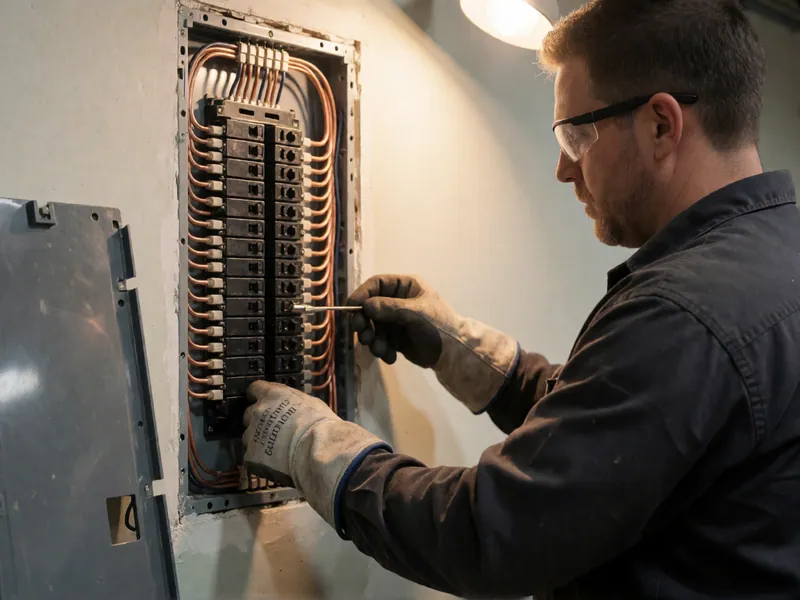
Replacing a tired or undersized load centre with a modern one — filed, inspected, and done in a day and a half.
$3,400 – $6,800
Load calculations
The arithmetic that decides whether you need a service upgrade at all — done before anybody quotes you one.
$340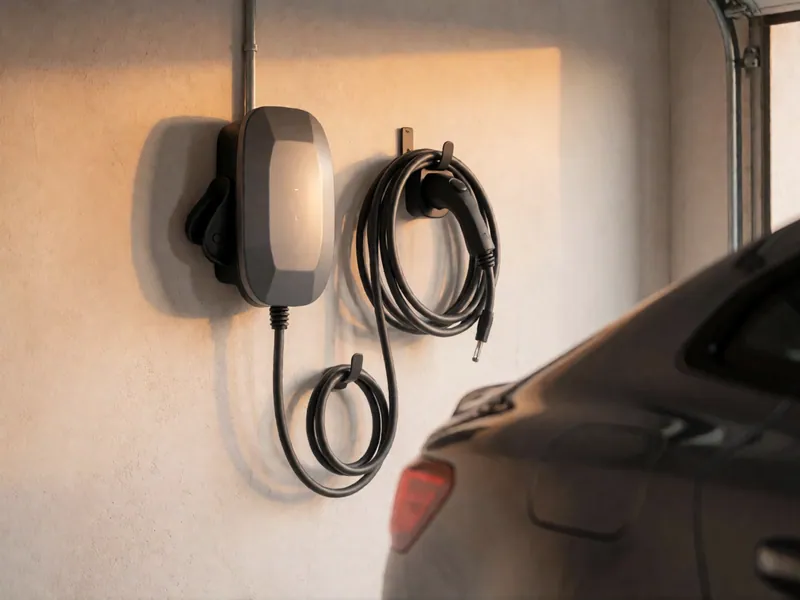
EV chargers
A Level 2 charger on a dedicated circuit, filed and inspected, with the load calculation done first.
$1,150 – $3,200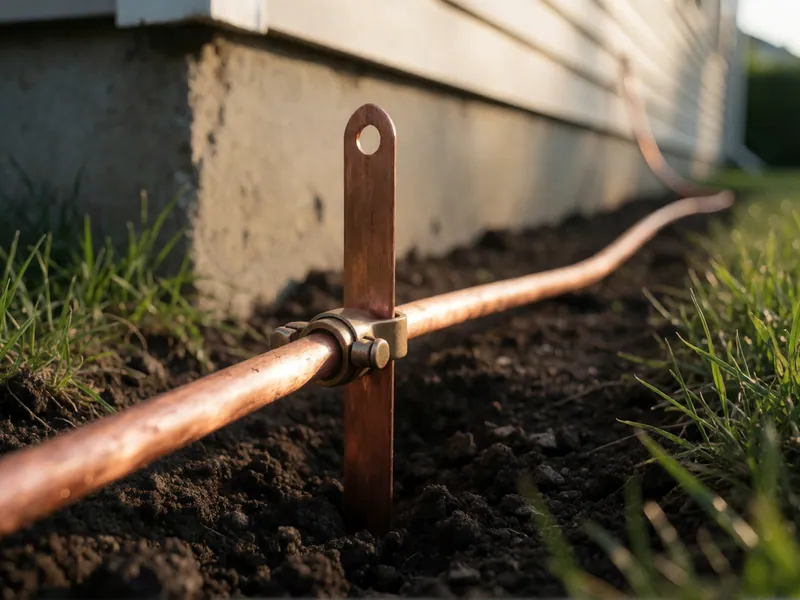
Grounding & bonding
The part of your system that does nothing at all until the day it is the only thing between you and a fault.
$285 – $2,200Somebody who does the work will come and look
Book a visit
Telephone the shop and you will get an electrician rather than a call centre. For defined work — a panel, a charger, a lighting scheme — the quote is free. For a fault, the visit is the diagnosis and it is $165 for the first hour, credited against the work if you go ahead the same visit. Either way we will tell you on the telephone which one it is.