EV, backup & commercial
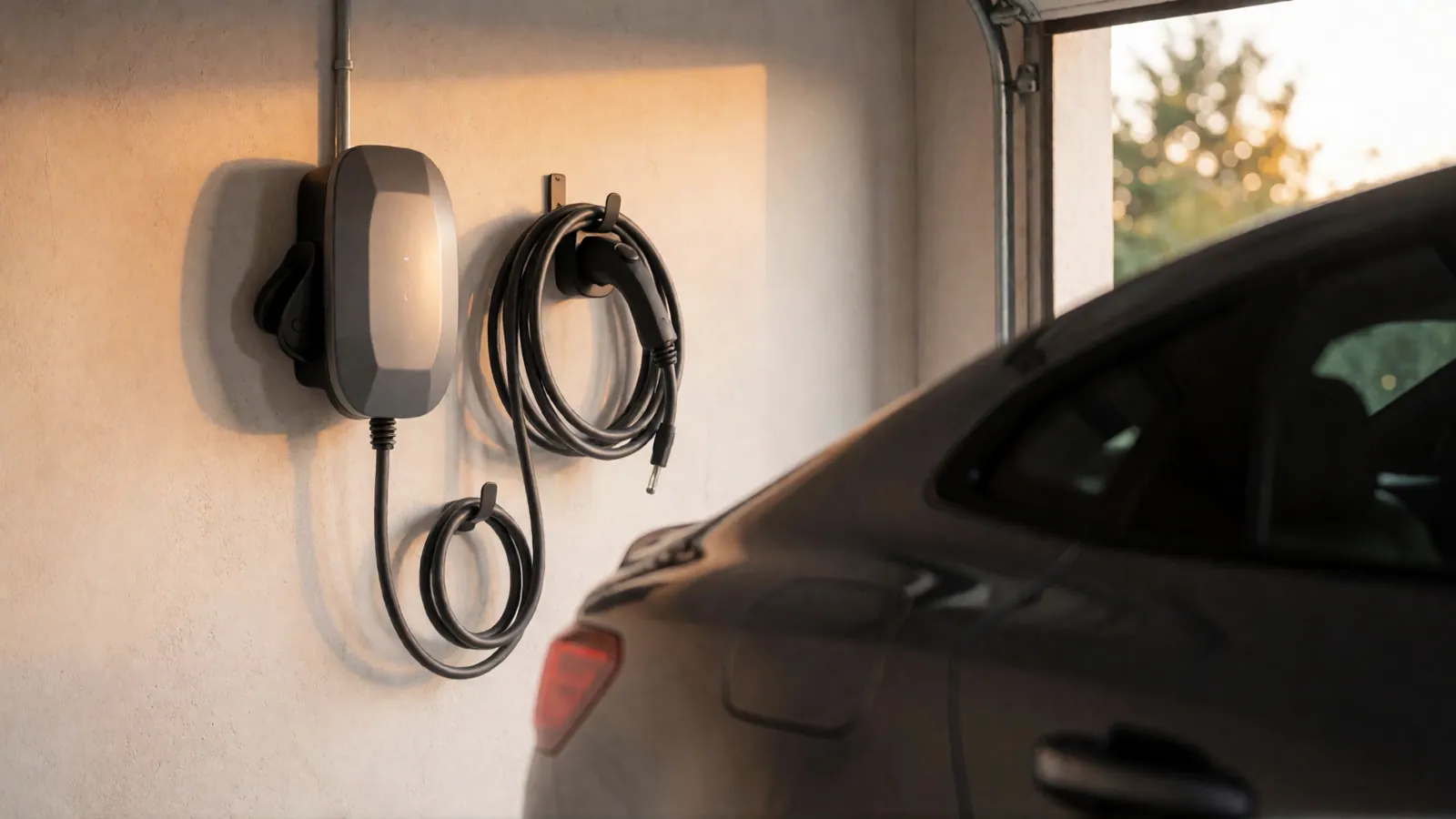
EV charger installation in Woodside, NY
The most important part of this job happens before anybody touches a wall: working out whether your existing service will carry it. Very often it will, and a great many people are sold a service upgrade they did not need.
A Level 2 charger is a dedicated 240 volt circuit and a wall unit. Electrically it is not complicated — it is a large, continuous, predictable load, which is the easiest kind to design for. What makes it a real job is that it is large enough to matter to the rest of the house, and that in New York City it is filed and inspected like any other new circuit.
Almost every conversation about EV charging in Queens starts with somebody having been told they need a 200 amp service. Sometimes true. Frequently not.
Do you actually need a service upgrade?
The honest answer is arithmetic. A load calculation accounts for the house's floor area, its fixed appliances, heating and cooling, and the charger, with the standard demand factors applied. It costs $340 and takes an afternoon.
A Woodside house with gas heat, a gas range and a gas water heater has a great deal of headroom on a 100 amp service, and will frequently take a full-current Level 2 charger without any change to the service at all. An all-electric house, or one with electric heat, is a different calculation and may genuinely need the upgrade.
There is also a middle answer that rarely gets offered: a charger configured to a lower current, or one on a load-management device that reduces charging when the house is busy. Both fit where a full-current installation will not. The trade-off is charging speed overnight, which for most commuting patterns is not a trade-off at all — a car that gains thirty miles an hour for nine hours is not the constraint anybody thinks it is.
Where the unit goes, and what that costs
The cost is dominated by the route from the panel to the parking spot. A charger on the garage wall directly behind the panel is at the bottom of the range. A charger at the far end of a driveway, with the panel in a basement at the front of the house, is at the top of it.
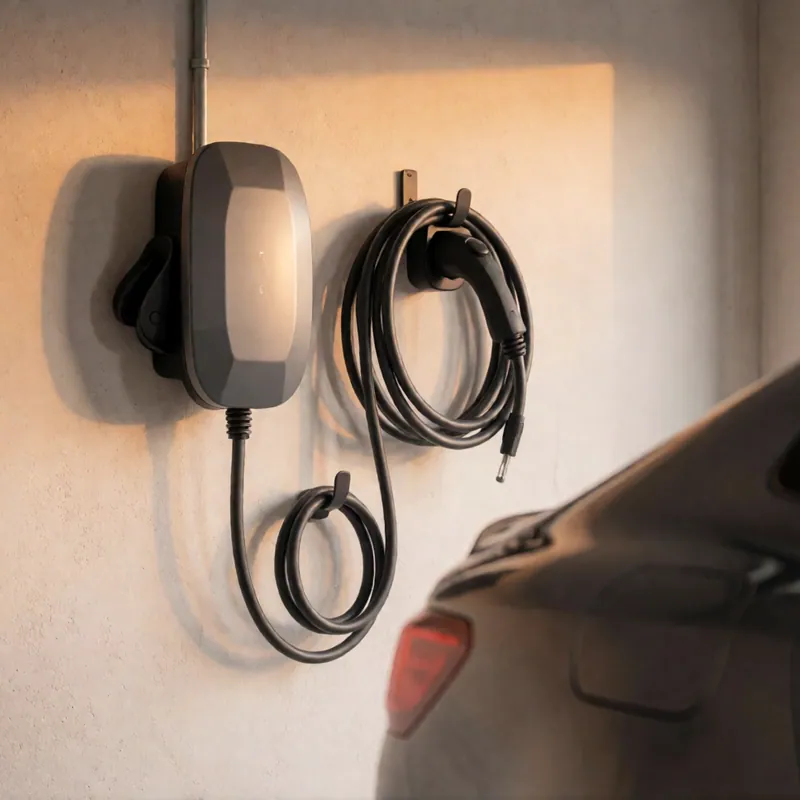
Practical things that matter more than people expect: which side of the car the inlet is on, whether you back in, the cable length you will actually need, and mounting height. A charger hung where the cable will not reach without stretching across a walkway is a daily irritation and a trip hazard. We ask before we drill.
Outdoors, everything is weather-rated and on ground-fault protection. Kerbside charging across a public sidewalk is not something we will install, and it is worth knowing that before you plan around it.
Co-ops, condos and shared parking
A shared garage is a different job again, because the questions become whose supply it comes from and how the energy gets billed. There are metered and managed solutions for exactly this, and the sensible approach in a small building is usually to design the infrastructure once for several spaces rather than run a separate circuit each time somebody buys a car.
We are happy to talk to a board or a managing agent, and we will put the options in writing so a committee can consider them without needing an electrician in the room.
Filed with the Department of Buildings, or not done. In New York City, electrical work is filed with the Department of Buildings by a licensed Master or Special Electrician, and the finished work is signed off after an inspection. A homeowner cannot pull an electrical permit here, and neither can an unlicensed handyman. If somebody offers to do your panel or your rewire cheaper by leaving the filing out, what they are selling you is unpermitted work: it is illegal, your insurer can decline a fire claim over it, and it surfaces at the worst possible moment, which is the day you sell or refinance. We file for everything that requires filing. When a job genuinely does not require a permit we will tell you that too, and we will tell you why.
Included as standard
What the job actually includes
Load calculation first
$340, credited in full against the work. Before anybody quotes you a service upgrade.
A dedicated circuit, correctly sized
Including the continuous-load allowance, which is what people get wrong on chargers.
The unit mounted where it actually suits
Cable reach, car orientation and walkways considered before we drill.
Weather-rated outdoors
Rated enclosure and ground-fault protection, without exception.
Filed and inspected
A new circuit is new work. It gets filed and it gets signed off.
The lower-cost options explained
Reduced current, load management, and what they actually cost you in charging speed.
When to call us
Signs this is the job you need
- A car arriving and a driveway or garage to charge it in
- Somebody has quoted a service upgrade and you want to know if it is necessary
- Currently charging from a domestic outlet on an extension lead
- A small building or shared garage where several people will want this
- A panel replacement already planned — the cheap moment to add the circuit
- A second car coming, which changes the calculation again
EV charger installation — what it costs
- Circuit and installation. A service upgrade, if the calculation calls for one, is separate.$1,150 – $3,200
This is the range this job actually lands in, not a headline figure. The low end is a straightforward version of the work; the high end is one with a hard access problem, an old service, or something that has to be opened up before anybody can be certain. We tell you which one you have after we have looked, and the written quote says where the price could still move and why.
Questions we are actually asked
EV chargers — frequently asked
Do I need a 200 amp service for an EV charger?
Often not. Plenty of Queens houses with gas heat and gas cooking take a Level 2 charger on an existing 100 amp service. The load calculation is $340 and can save you five figures, so do that before anybody sells you a service upgrade.
Can I just use a normal outlet?
A standard outlet will add a few miles of range an hour, which suits some people entirely. What it must not be is an extension lead, or a shared circuit — a car draws its maximum continuously for hours, which is exactly the condition that finds a weak connection. If that is your plan, at least let us put in a dedicated outlet for it.
Which charger should I buy?
We fit whatever you choose and we do not take a commission from anybody, which is why there is no brand named anywhere on this site. What we will tell you is which features actually matter for your situation — cable length, whether you need current adjustment, and whether load management is worth it.
Related work
Often needed alongside this

Load calculations
The arithmetic that decides whether you need a service upgrade at all — done before anybody quotes you one.
$340
Service upgrades
Taking a house from 100 amps to 200, including the mast, the meter pan and the utility coordination.
$5,200 – $11,500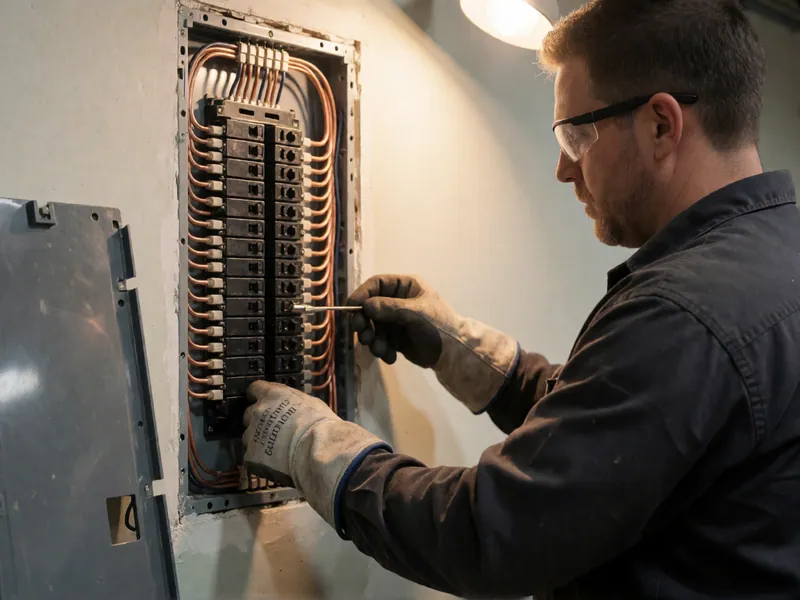
Panel upgrades
Replacing a tired or undersized load centre with a modern one — filed, inspected, and done in a day and a half.
$3,400 – $6,800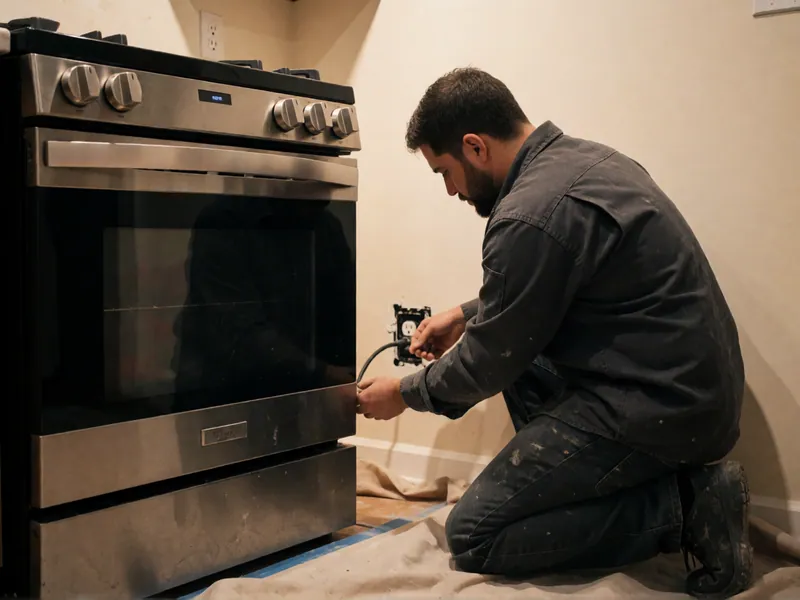
Appliance circuits
Ranges, dryers, wall ovens, mini-splits and window units, each on the circuit its nameplate actually asks for.
$520 – $1,800Somebody who does the work will come and look
Book a visit
Telephone the shop and you will get an electrician rather than a call centre. For defined work — a panel, a charger, a lighting scheme — the quote is free. For a fault, the visit is the diagnosis and it is $165 for the first hour, credited against the work if you go ahead the same visit. Either way we will tell you on the telephone which one it is.