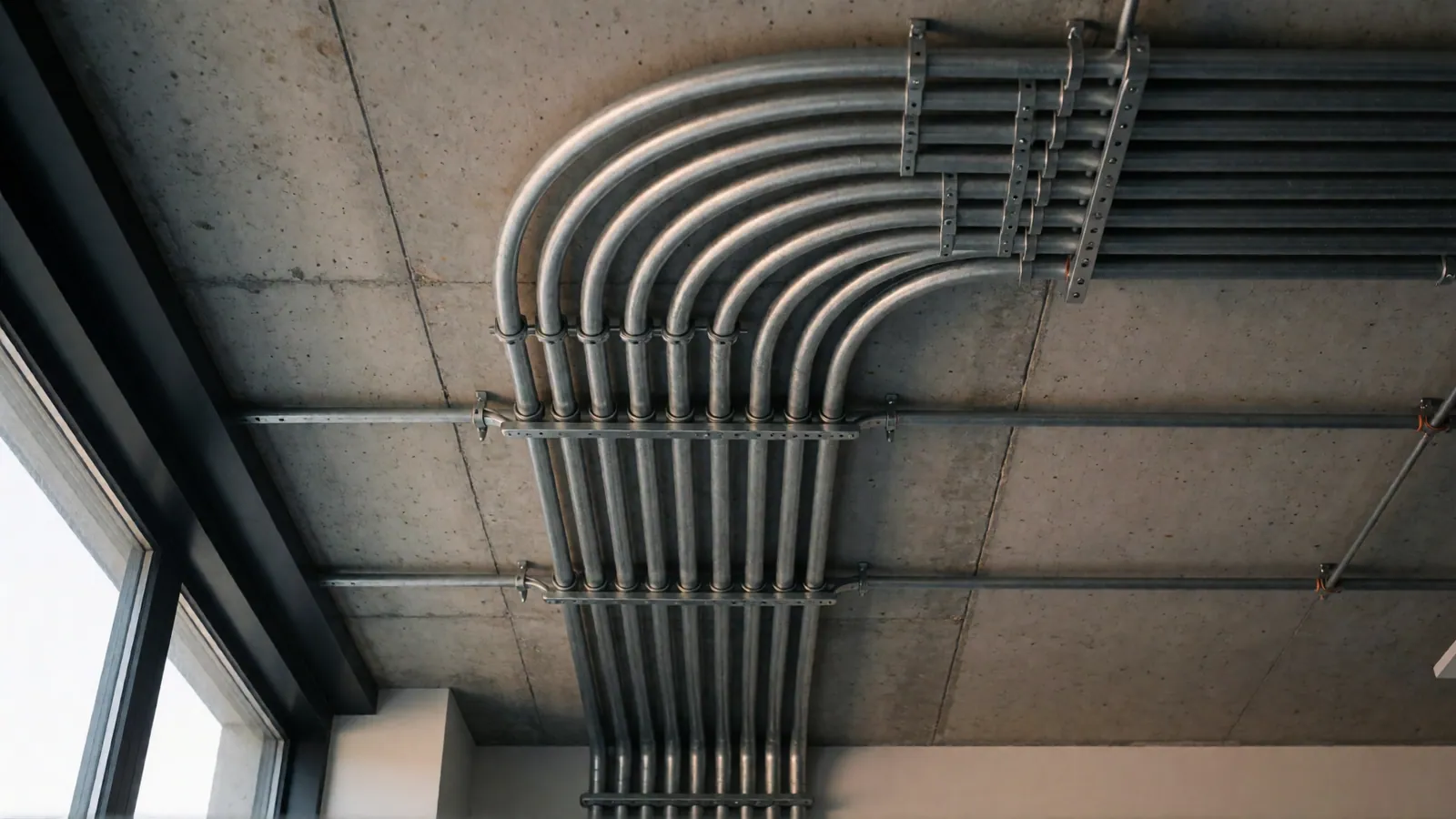
What “to code” actually means
Code and standards
“That is not to code” is the most misused sentence in this trade. It is sometimes a serious finding and it is very often just a statement that a building is older than a rule.
Which rules apply here
New York City has its own Electrical Code, which is based on the National Electrical Code with amendments specific to the city. Work is filed with and inspected under that, and the inspection is typically carried out by an approved inspection agency rather than by departmental staff.
The practical consequence is that this is a filed-and-inspected jurisdiction with a licensing gatekeeper. What gets built has to be built to be looked at by somebody who is not us, which is a genuinely useful discipline and is why we would rather work here than in places where it is optional.
Codes are not retroactive, and that is not a loophole
New work complies with what is required now. Existing work that was compliant when it was installed is generally allowed to remain, and it does not become illegal because a later edition changed a requirement. If it did, every building in this neighbourhood would be condemned on the day a new edition was published.
That is why our surveys separate dangerous now from not how it would be done today. Both are worth knowing. Only one of them is an instruction. Somebody who presents the second as the first is either careless or is counting on you not knowing the difference.
What does trigger current requirements is touching the work: altering a circuit, extending it, replacing the panel, or changing the service. At that point the parts you touch come up to date, which is one of the reasons a panel replacement in an old house improves so much beyond the panel itself.
The requirements that have moved most in this housing stock
Ground-fault protection, which has expanded steadily from a single outdoor receptacle in the nineteen-seventies to bathrooms, kitchens, laundry areas, basements, garages and outdoors. Arc-fault protection, which did not exist and now covers most habitable rooms in new work. Grounding conductors at every outlet, which houses of this age simply do not have. Kitchen small-appliance circuit counts. Four-wire connections for ranges and dryers. Interconnected alarms.
None of that makes your 1948 installation illegal. All of it explains why a rewire changes the building so much more than it appears to on paper.
What we will not tell you
That something is “against code” when what we mean is that we would not have done it that way. That a rule requires work it does not require. Or that an inspector will fail something we have not actually seen an inspector fail. If we say a job is required, we will say which requirement, and you are entitled to ask.
Nobody has voted us anything. We claim no award, no ranking, no accreditation badge and no rating from any directory, review platform or trade body. There are no customer reviews or star ratings anywhere on this website, because a rating you cannot trace to a real customer is decoration. We name no manufacturer as a partner and wear nobody's logo. What we will tell you is who holds the licence, what it permits, and where you can check it for yourself.
Three tiers, kept separate
How we describe a finding
Dangerous now
A live hazard. You are told before we leave the building, not in a report you read next week, and we will make it safe on the spot if it warrants that.
Should be planned
A real defect on a sensible timescale — months rather than hours. Worth budgeting for, not worth panicking about.
Not how it would be done today
Compliant when built, overtaken by practice since. Information rather than an instruction, and a great deal of it never needs acting on.
Somebody who does the work will come and look
Book a visit
Telephone the shop and you will get an electrician rather than a call centre. For defined work — a panel, a charger, a lighting scheme — the quote is free. For a fault, the visit is the diagnosis and it is $165 for the first hour, credited against the work if you go ahead the same visit. Either way we will tell you on the telephone which one it is.