Grounding, safety & testing
Grounding and bonding checkups in Woodside, NY
Grounding is the part of your electrical system that does nothing whatsoever, every day, for decades — until the day it is the only thing standing between a person and a fault. It is also the part nobody looks at, because nothing about it ever appears to go wrong.
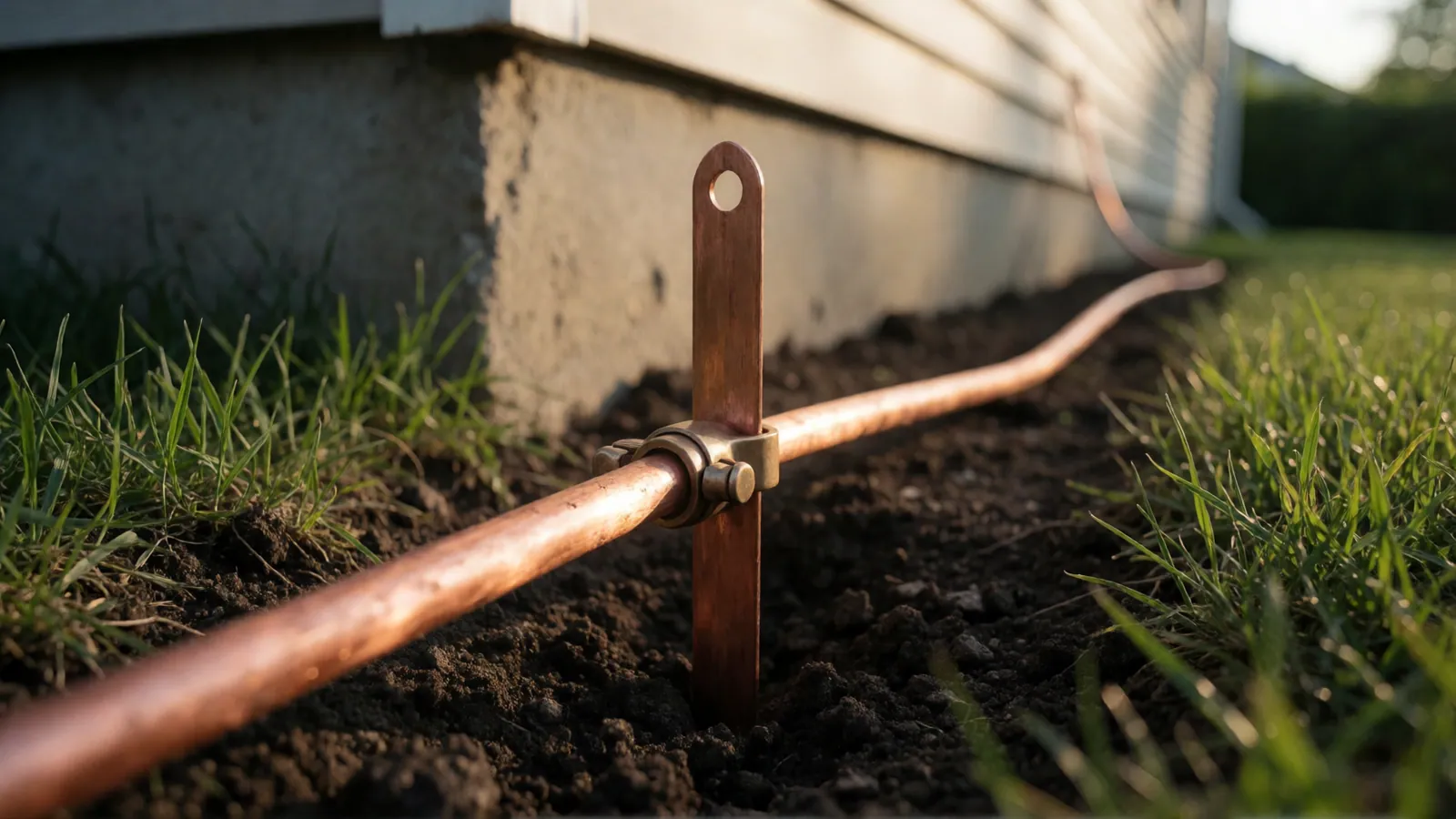
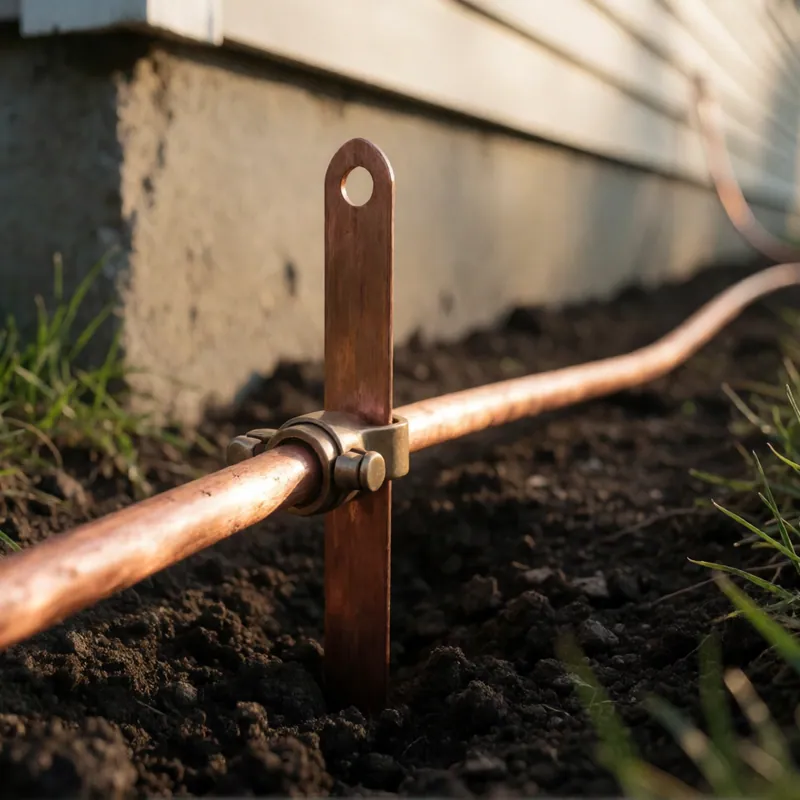
Two different things get called “grounding” and confusing them is why the subject is so badly explained. The grounding electrode system connects your service to the earth — rods, a water pipe electrode, sometimes the building steel or the concrete-encased reinforcement. Bonding connects all the metal in the building together and back to the source, so that everything metal you can touch is at the same potential.
It is bonding that saves lives. When a live conductor touches the metal case of an appliance, what clears the fault is a low-impedance path back to the source, which lets enough current flow to trip the breaker instantly. Earth itself is a poor conductor and will not do that. The rod in your garden is doing a different, more limited job — mostly about lightning and utility surges.
What actually goes wrong, in this housing stock
Woodside is full of houses built between 1910 and 1950, which means we find the same handful of faults over and over.
The commonest by a distance: a water-pipe electrode that was perfectly valid when the copper service pipe ran to the street, and is now bonded to a length of pipe that was replaced with plastic in 1988. The bond is still there. It goes nowhere. Nothing about the house behaves any differently, and nobody ever noticed.
Next: a bonding jumper missing across a water meter or a dielectric union, so the two halves of the plumbing are no longer connected to each other. Then: no bond to the gas piping. Then: a subpanel with neutrals and grounds landed on the same bar, which puts normal working current onto every grounding conductor and every metal thing attached to them. Then: three-prong receptacles fitted to a two-wire circuit with no ground behind them, which gives you the appearance of protection and none of the substance.
What a checkup involves
We look at the whole path rather than the parts of it that are easy to see. Electrode type, condition and connection. Grounding electrode conductor size, routing and terminations. Every bond: water, gas, building steel where present, and across anything that interrupts the continuity of the plumbing. The main bonding jumper at the service. The separation of neutrals and grounds at each subpanel. Continuity of the equipment grounding conductor at a sample of outlets through the house, tested rather than assumed from the presence of a third pin.
You get the results written down, with the faults ranked by what they actually expose you to rather than by what they cost to fix. If everything is sound — which does happen — that is what the report says, and the $285 has bought you the knowledge rather than a job.
Why this is the cheapest safety improvement in most old houses
A panel replacement is thousands. A rewire is tens of thousands. Correcting the grounding and bonding of a Queens two-family is usually somewhere between a few hundred dollars and about two thousand, and in terms of the specific outcome — you touch something metal that has become live, and the breaker opens before you are hurt — it is frequently the single largest improvement available in the building.
It is also the least sold, because it is unglamorous and there is no equipment to mark up. That is roughly why it appears this prominently on this website.
A report on what was reachable on the day. An electrical inspection is a report on what was accessible on the day. We cannot see inside a finished wall, under a floor we did not lift, or behind equipment we were not able to isolate, and no instrument we own sees through plaster. So we can tell you what we found and what we could not reach, and we will write down both. What we cannot do — what nobody can honestly do — is certify that a building is safe. Anyone offering you that is selling you a feeling.
Included as standard
What the job actually includes
Electrode system examined
Type, condition, connection and conductor — including whether the water-pipe electrode still reaches metal pipe in the ground.
Every bond checked
Water, gas, building steel, and jumpers across meters and dielectric unions.
Neutral and ground separation verified
At every subpanel. The invisible defect that puts working current on things you touch.
Equipment grounding continuity tested
At a sample through the house — measured, not inferred from a third pin being present.
Written findings, ranked by exposure
By what it actually puts you at risk of, not by what it costs to put right.
A quote only if there is something to fix
If it is all sound, the report says so and there is nothing further to buy.
When to call us
Signs this is the job you need
- Two-prong outlets, or three-prong outlets in a house with two-wire circuits
- A tingle from a tap, a radiator, an appliance case or a metal window frame
- The water service was replaced with plastic at some point
- A subpanel with neutrals and grounds on the same bar
- Work has been done on the plumbing and nobody mentioned a bonding jumper
- You are having a panel or service upgrade and want the grounding done properly with it
Grounding and bonding checkups — what it costs
- A checkup at the low end; a full electrode and bonding correction at the high one.$285 – $2,200
This is the range this job actually lands in, not a headline figure. The low end is a straightforward version of the work; the high end is one with a hard access problem, an old service, or something that has to be opened up before anybody can be certain. We tell you which one you have after we have looked, and the written quote says where the price could still move and why.
Questions we are actually asked
Grounding & bonding — frequently asked
Is a ground rod enough on its own?
For the job most people imagine it doing, no. Earth is a poor conductor and a rod alone will not pass enough current to trip a breaker on a fault. What clears a fault is the bonded path back to the source. The rod matters for lightning and utility surges. Both are needed and they are not substitutes for one another.
My outlets have three pins, so I am grounded, right?
Not necessarily. Fitting a three-pin receptacle to a two-wire circuit is common in old Queens houses and gives you the appearance of a ground with nothing behind it. It takes seconds to test and we check a sample through the house as part of the checkup.
Do I need this if I am already having a rewire?
It is included in a rewire and in a panel or service upgrade — the grounding and bonding is brought up to current requirements as part of that work rather than sold separately. The standalone checkup is for houses not having anything else done.
Related work
Often needed alongside this
Safety inspections
A written report on what we found, what we could not reach, and what actually needs doing first.
$385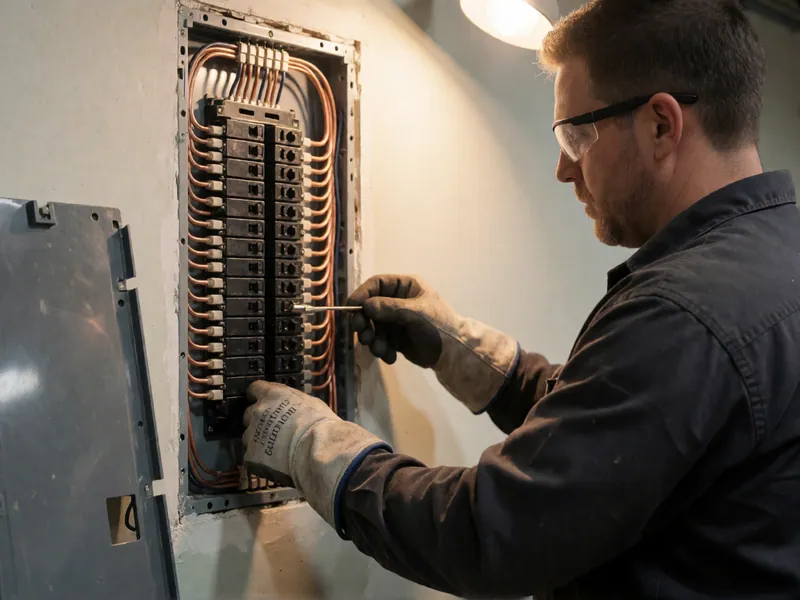
Panel upgrades
Replacing a tired or undersized load centre with a modern one — filed, inspected, and done in a day and a half.
$3,400 – $6,800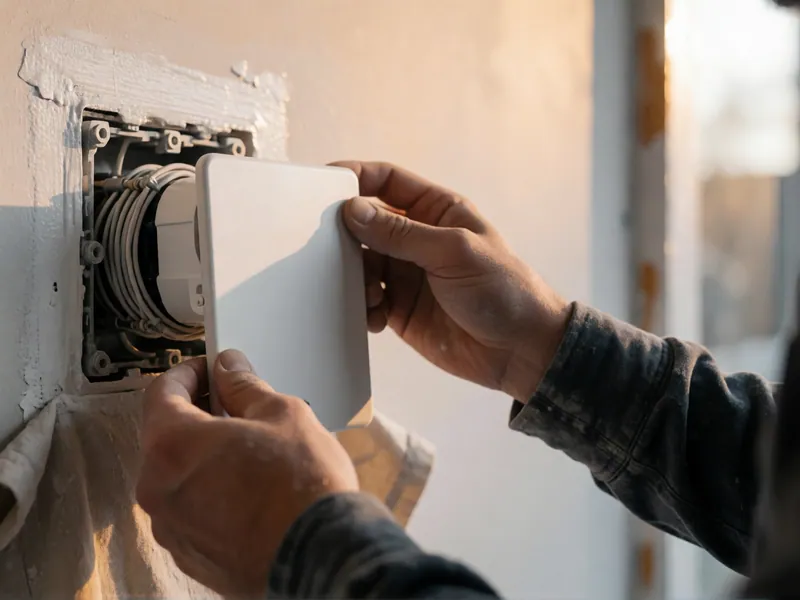
Outlets & switches
Adding, moving and replacing devices — including the two-prong outlets an old Queens house is still full of.
$145 – $420
Surge protection
What a service-entrance device does, what it does not do, and why it is not a substitute for a strip at the desk.
$540 – $980Somebody who does the work will come and look
Book a visit
Telephone the shop and you will get an electrician rather than a call centre. For defined work — a panel, a charger, a lighting scheme — the quote is free. For a fault, the visit is the diagnosis and it is $165 for the first hour, credited against the work if you go ahead the same visit. Either way we will tell you on the telephone which one it is.